
RV Insurance Cost by State: Regional Rate Tiers, Pricing Drivers, and What to Verify Before You Buy
RV insurance cost by state is not a simple ranking from cheapest to most expensive. Insurers price policies using risk concentration, claim severity, catastrophe exposure, repair economics, and liability patterns.
That means two owners in the same state can pay dramatically different premiums depending on where the RV is stored, how it is used, and what level of protection is chosen.
Instead of relying on misleading “average premium lists,” use the regional tier model below to understand where your state typically falls — and more importantly, why.
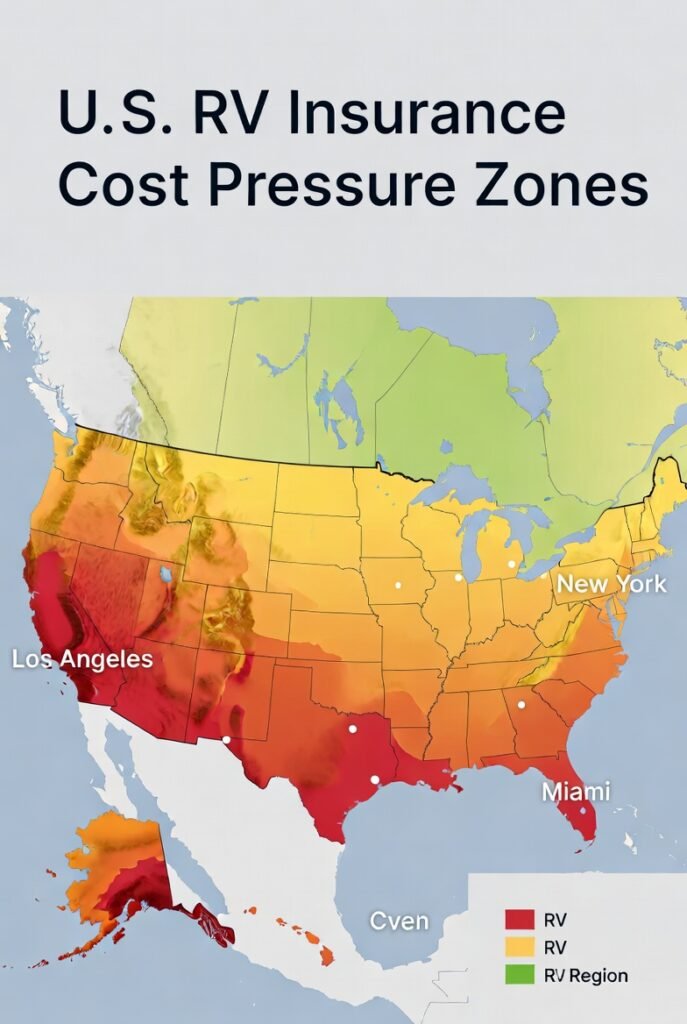
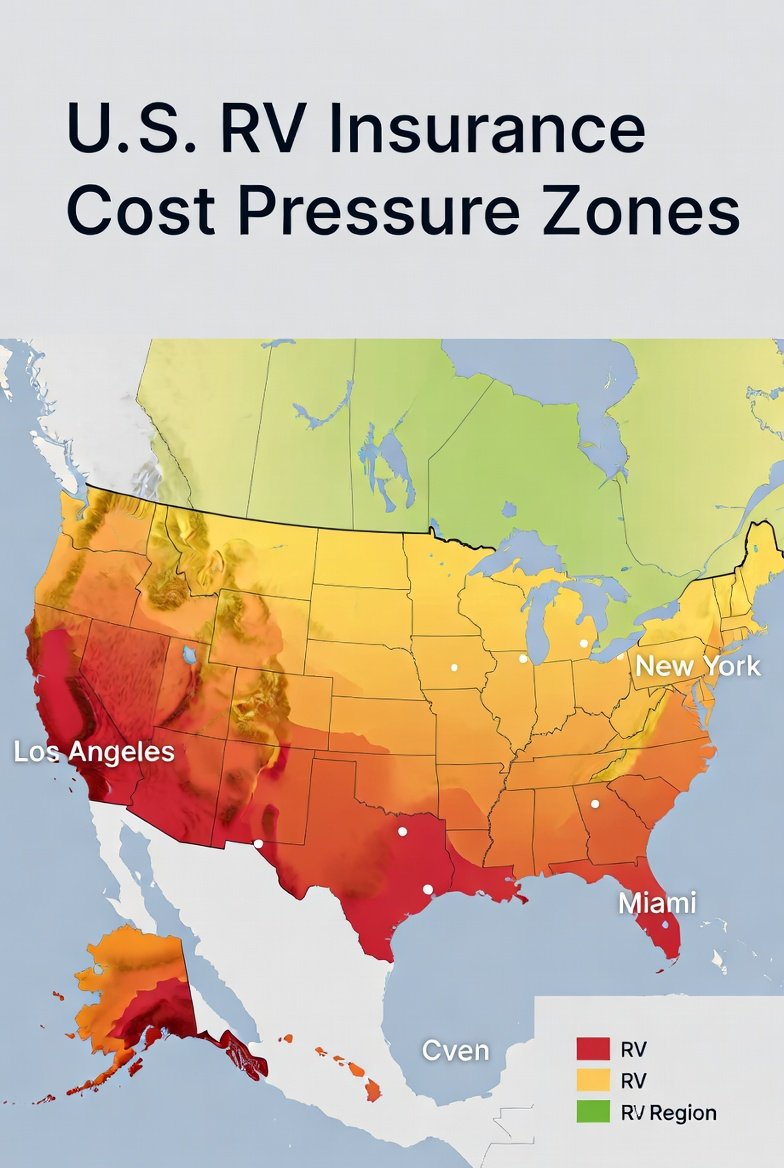
The Regional Tier Map (How Insurers Actually View the Country)
Tier | Risk Environment | Typical Premium Direction | Primary Cost Drivers | Primary Verification Step |
Tier 1 — Lower Pressure | Rural density, fewer catastrophe losses | Lower relative premiums | Lower claim frequency, lower repair costs | Confirm valuation so you don’t underinsure |
Tier 2 — Moderate Pressure | Mixed weather + mixed traffic | Mid-range pricing | Balanced severity and exposure | Verify garaging accuracy |
Tier 3 — Elevated Pressure | Dense metros or severe storm zones | Higher premiums | Collision severity, hail, wildfire pockets | Confirm deductible structure |
Tier 4 — Highest Pressure | Catastrophe-heavy regions | Highest pricing bands | Hurricanes, extreme hail, wildfire, theft clusters | Verify underwriting answers before binding |
The tier system matters because insurers do not evaluate risk evenly across the country. A coastal storage location may behave like an entirely different insurance market compared to an inland rural ZIP code.
Why RV Insurance Costs Change From State to State
Insurance pricing revolves around two variables:
- Claim frequency — how often losses occur
- Claim severity — how expensive those losses become
States vary on both.
What Raises Claim Frequency
- Dense traffic corridors
- Higher theft and vandalism rates
- Longer travel seasons
- Larger full-time RV populations
- RV Insurance coverage
What Raises Claim Severity
- Higher labor and repair costs
- Medical and liability payouts
- Catastrophe exposure
- Litigation environment
- RV Insurance discounts
A policy is ultimately priced where the RV sleeps most nights — not where you vacation.
Regional Forces That Push Premiums Higher
Coastal Storm Exposure
Wind and storm surge can create total-loss scenarios. Even infrequent events reshape insurer pricing models.
What to verify:
- Wind or named-storm deductibles
- Comprehensive coverage structure
- Storage expectations during peak storm periods
Severe Hail Corridors
Large roof surfaces make RVs particularly vulnerable to hail damage.
What to verify:
- Whether hail falls under comprehensive
- Roof-surface limitations on older rigs
- Separate deductibles for storm losses
Wildfire Risk Zones
Wildfire pricing often occurs at the ZIP-code level rather than statewide.
What to verify:
- Garaging ZIP accuracy
- Seasonal location disclosures
- Total-loss settlement method
Dense Metropolitan Areas
Higher accident severity and repair inflation can push premiums upward even without catastrophe exposure.
What to verify:
- Liability limits appropriate for asset protection
- Collision deductible realism
- Medical coverage structure
Saving on liability is one of the most expensive mistakes owners make.
What Actually Moves Your Premium More Than “State”
RV Type and Insured Value
Higher-value rigs increase both comprehensive and collision exposure. Motorhomes typically produce larger claims than smaller towables.
Verify:
If financed, confirm lender coverage requirements before quoting.
Usage Pattern
Full-time RV use changes the risk profile because the vehicle functions as a residence.
Verify:
Disclose usage honestly. Misrepresentation is a common trigger for claim disputes.
Garaging Location
The storage address heavily influences underwriting.
Verify:
Clarify what the insurer considers garaging — residence, storage facility, or primary overnight location.
Deductibles
Higher deductibles reduce premiums but increase financial exposure after a loss.
Verify:
Confirm differences between collision and comprehensive deductibles and whether special storm deductibles apply.
Driver Disclosure
Undisclosed drivers create avoidable coverage problems.
Verify:
Ensure all potential operators are listed correctly.
Quote Strategy: How to Compare RV Insurance by State Without Getting Misled
Follow a structured approach so RV Insurance quotes remain comparable.
1. Lock Your Inputs
Record these before requesting quotes:
- RV type, year, and estimated value
- Storage ZIP code
- Usage pattern
- Annual mileage estimate
- Driver list
- RV Insurance strategy
2. Lock Your Coverage Baseline
Keep these identical across carriers:
- Liability limits
- Comprehensive deductible
- Collision deductible
- Medical / uninsured motorist selections
- Desired endorsements
Changing these between quotes makes pricing meaningless.
3. Quote Through Multiple Channels
- RV-focused carriers
- Large multiline insurers
- Independent brokers
Different underwriting appetites can produce meaningful price gaps.
4. Confirm Coverage Line-by-Line
Ask directly:
“Do these quotes match the same coverage and deductibles?”
Small differences often explain large price swings.
5. Validate Underwriting Answers
Cheap quotes frequently rely on incomplete assumptions.
Confirm:
- Storage address
- Usage classification
- Driver list
- Valuation method
6. Bind Only After Verification
Speed causes mistakes.
Verification prevents them.
Verification Checklist Before Purchasing
Garaging and Storage
- Is the address accurate?
- Is facility storage disclosed?
- Will seasonal moves require notification?
Usage
- Recreational or full-time?
- Any rental activity?
- Any business usage?
Rental exposure requires a different insurance structure.
Valuation Method
Ask which applies:
- Actual cash value
- Agreed value
- Replacement cost
Understand how depreciation is calculated.
Drivers
- Are all drivers listed?
- Are any excluded?
- Could household members reasonably operate the RV?
Peril Treatment
Confirm how the policy handles:
- Wind
- Hail
- Flood
- Roof damage
- Water intrusion
Claims Handling
Ask how repairs are managed and what qualifies as a total loss.
Clarity here prevents surprises later.
Limitations and Drawbacks
State-level pricing should be treated as directional — not predictive. Actual premiums vary based on:
- ZIP-level catastrophe risk
- RV valuation
- Liability selections
- Storage realities
- Driver history
- Coverage structure
A lower-risk state does not guarantee a low premium if the individual risk profile is elevated.
Quick Decision Guide
- Storm-exposed storage → expect higher tiers
- Rural storage with lower exposure → typically lower tiers
- Metro proximity → often higher severity pricing
- Seasonal movement → pricing follows the primary location
When uncertainty exists, assume the higher tier until quotes confirm otherwise.
Next Steps
- Confirm where the RV is primarily stored
- Choose liability limits before quoting
- Run multiple comparable quotes
- Complete the verification checklist
- Bind only after confirming valuation, Rv insurance exclusions, and drivers
A disciplined approach reduces both premium surprises and claim friction.