
RV Full Coverage Insurance: What It Really Protects
RV repairs can easily exceed $15,000–$40,000 after a serious accident or storm. Even moderate damage to a motorhome’s roof, slide-outs, or body panels can cost thousands of dollars to repair.
Because of these risks, many RV owners choose full coverage insurance rather than liability-only protection.
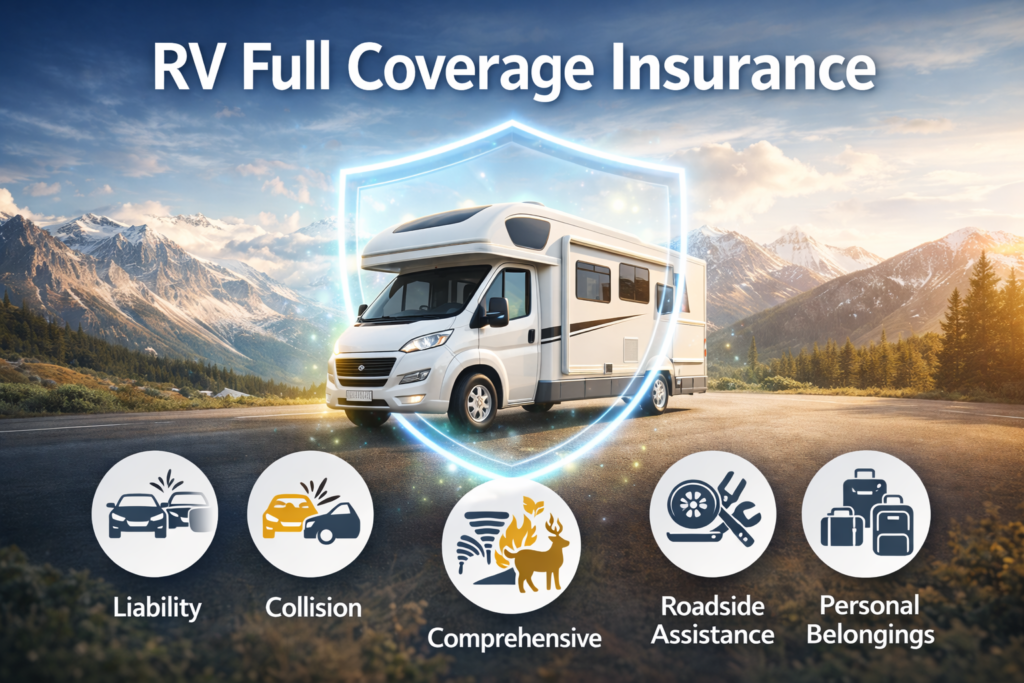
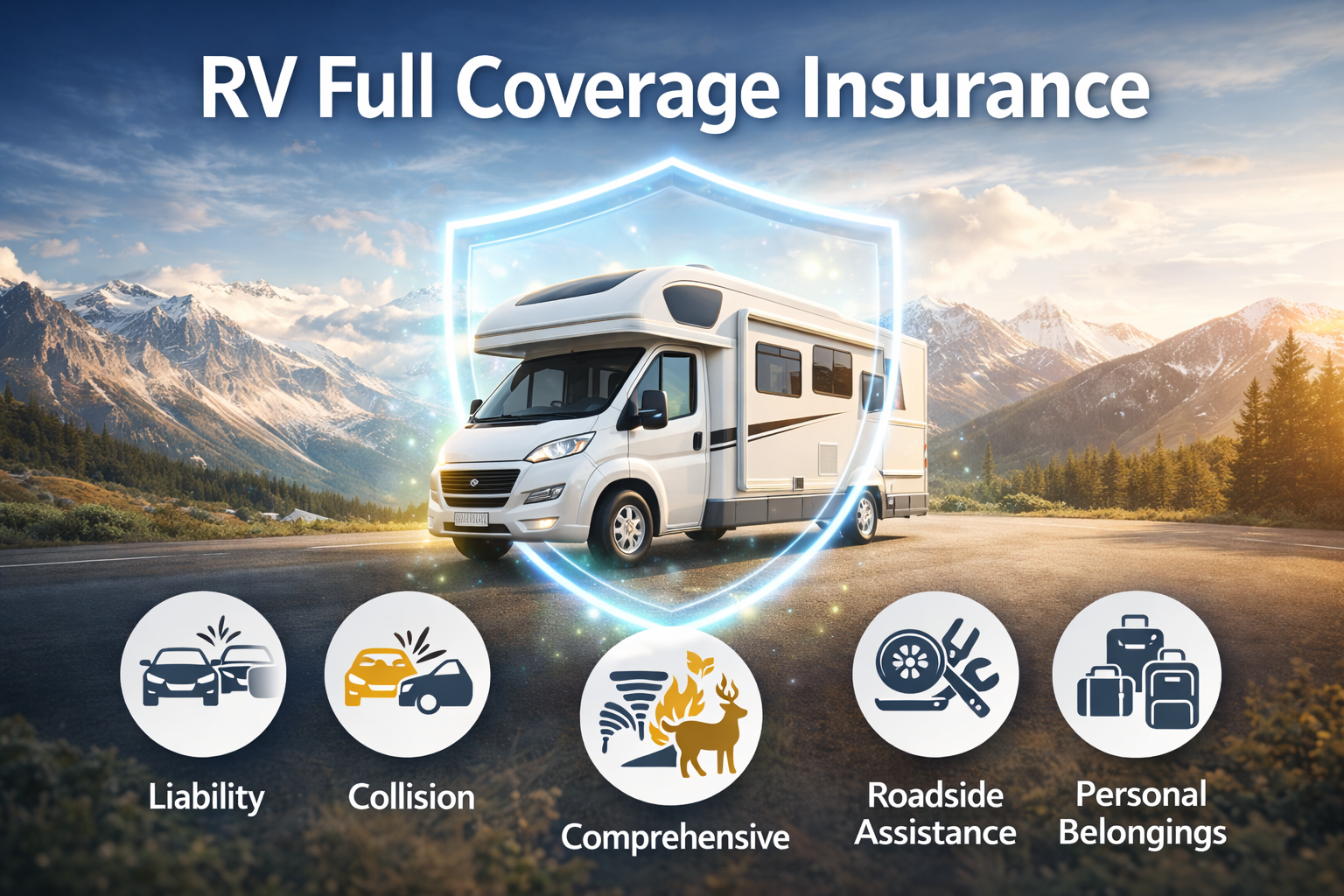
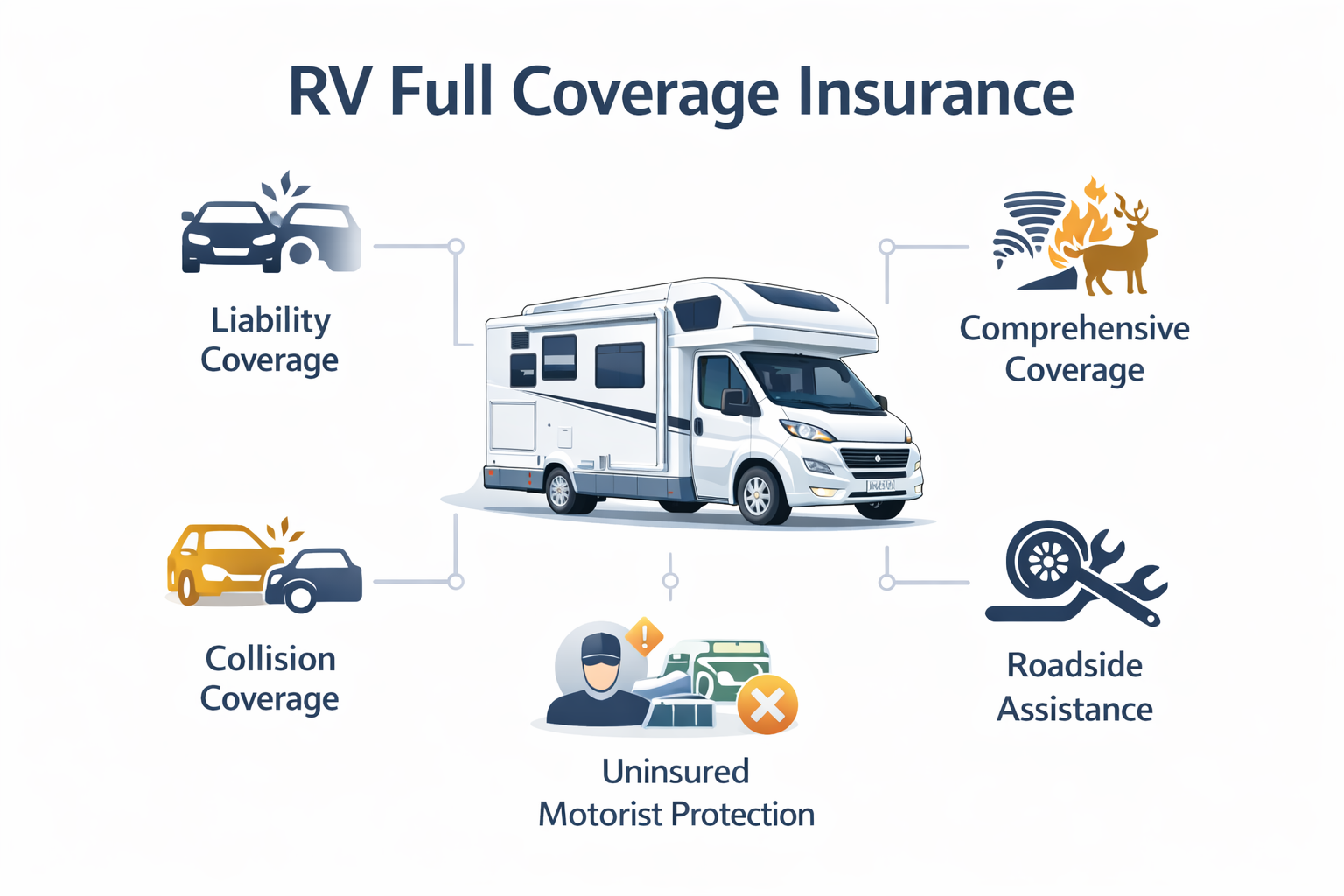
RV full coverage insurance usually refers to a policy that includes liability, collision, and comprehensive coverage, protecting both other people and the RV itself from accidents, theft, storms, or vandalism.
While the term sounds simple, many policies vary widely in what they actually protect. Understanding the structure of full coverage helps RV owners avoid costly gaps.
For a full breakdown of insurance pricing ranges across RV types, see:
What “Full Coverage” Means for RV Insurance
Unlike homeowners insurance, “full coverage” is not a specific insurance policy type.
Instead, the term describes a policy that combines multiple protections into one coverage package.
Most RV full coverage policies include three core protections.
Coverage Type | What It Protects | Example Situation |
Liability | Damage or injuries you cause to others | Accident with another vehicle |
Collision | Damage to your RV from crashes | Backing into a tree |
Comprehensive | Non-collision damage | Theft, storms, vandalism |
Comprehensive coverage protects RVs from events outside the driver’s control such as hailstorms, falling branches, fire, or animal collisions.
Collision coverage protects the RV during accidents.
For a deeper explanation of how these protections work together, see:
rv-insurance-coverage-explained
Coverage Map: When Each Protection Applies
Each insurance layer applies to different types of risks.
Situation | Coverage Used |
Crash with another vehicle | Liability + Collision |
RV theft | Comprehensive |
Storm damage | Comprehensive |
Backing accident | Collision |
Injury near RV campsite | Liability |
RV insurance must protect both driving risks and campground living risks, which is why policies differ from normal auto insurance.
Average Cost of RV Full Coverage Insurance
Many RV owners also want to understand the typical price range for full coverage policies.
RV Type | Typical Annual Cost |
Travel trailer | $500 – $1,200 |
Class C motorhome | $700 – $2,000 |
Class A motorhome | $1,000 – $4,000 |
Motorhomes usually cost more to insure than towable RVs because they combine both vehicle and living-space risks.
More detailed cost breakdowns are available here:
Real RV Repair Cost Examples
Insurance becomes easier to understand when you look at real repair costs.
Damage Type | Typical Repair Cost |
Roof hail damage | $5,000 – $15,000 |
Slide-out mechanism repair | $3,000 – $8,000 |
Front collision damage | $8,000 – $25,000 |
Because RV repairs can be expensive, many owners prefer full coverage protection for newer or high-value motorhomes.
How Deductibles Affect RV Full Coverage Insurance
Deductibles influence both the premium and the amount paid after a claim.
Deductible | Typical Impact |
$250 | Higher monthly premium |
$500 | Moderate premium |
$1,000 | Lower premium |
Choosing a higher deductible reduces insurance premiums but increases the out-of-pocket cost after an accident.
A deeper explanation of deductible strategies can be found here:
Liability vs Full Coverage: The Key Difference
Liability insurance protects other people, not your RV.
Coverage Type | Protects Your RV | Protects Others |
Liability only | ❌ No | ✔ Yes |
Full coverage | ✔ Yes | ✔ Yes |
If your RV causes an accident, liability coverage pays for damage to other vehicles or injuries.
Repairing your own RV requires collision coverage.
Typical RV Liability Coverage Limits
Insurance companies offer several liability limit options.
Liability Limit | Typical Use |
$50,000 | Minimum coverage states |
$100,000 | Common mid-level coverage |
$300,000+ | Higher protection for expensive RVs |
Higher liability limits provide greater financial protection if an accident causes serious damage or injuries.
RV Coverage Decision Engine
This quick table helps determine when full coverage is usually recommended.
Situation | Recommended Coverage |
New motorhome worth $100k+ | Full coverage |
Financed RV | Full coverage required |
Frequent travel | Full coverage |
Full-time RV living | Full-time RV insurance |
Older RV under $10k | Liability may be enough |
This type of decision framework helps RV owners balance risk and insurance cost.
Insurance Companies Offering RV Full Coverage
Several insurers specialize in RV insurance policies.
Company | Known For |
Progressive | Large RV insurance network |
Good Sam | RV-focused insurance plans |
National General | Full-time RV coverage |
Foremost | Specialty motorhome policies |
Coverage options and pricing vary significantly between insurers, so comparing quotes is recommended.
Situations RV Insurance May Not Cover
Insurance policies often exclude certain risks.
Common exclusions include:
- mechanical breakdown or wear and tear
• mold damage caused by long-term leaks
• maintenance neglect
• using recreational policies for full-time living
Understanding policy exclusions helps prevent claim disputes later.
A full explanation of common exclusions is available here:
Verify These Details Before Assuming You Have Full Coverage
Before buying a policy, verify these key details carefully.
Checklist:
- liability coverage limits
• collision deductible amount
• comprehensive deductible amount
• personal belongings coverage limits
• whether full-time RV use requires extra coverage
• theft protection during storage
Many claim disputes occur simply because policy details were misunderstood.
Final Thoughts
RV full coverage insurance provides the broadest protection against accidents, storms, theft, and liability claims.
Although it costs more than liability-only insurance, it is often the safest option for newer motorhomes or RV owners who travel frequently.
For older RVs with lower value, liability-only coverage may sometimes make financial sense.
Understanding exactly what your policy covers is the best way to avoid expensive surprises.