
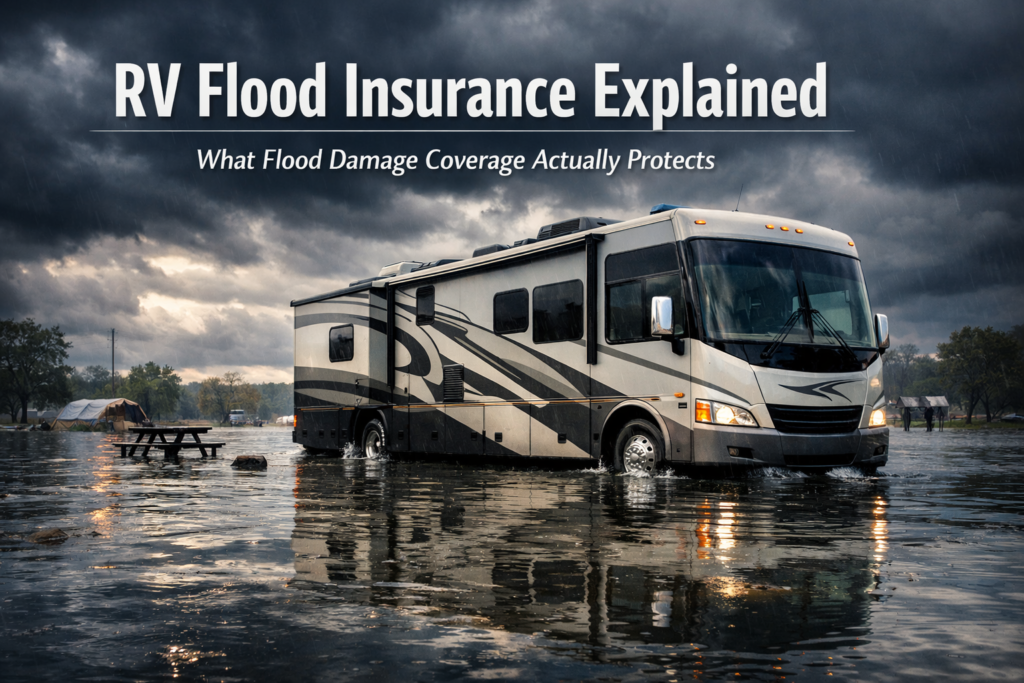
RV Flood Insurance: What Flood Damage Coverage Actually Protects
Quick Answer
RV flood damage is usually covered under comprehensive RV insurance when caused by external flooding, storm surge, or sudden water intrusion.
A weekend storm passes overnight.
Campground roads are muddy, puddles have formed everywhere, and the nearby river has crept closer to the campsites.
By morning, water has entered several parked RVs.
Owners often assume the same thing:
“Flood damage must be covered.”
Sometimes it is.
But RV flood insurance claims depend heavily on how the water entered the vehicle, whether comprehensive coverage is active, and whether the insurer believes the damage came from a sudden flood event or a maintenance problem.
Understanding how flood protection works before a claim occurs helps prevent expensive surprises.
How RV Flood Insurance Actually Works
RV flood insurance usually exists within comprehensive coverage, rather than as a separate policy.
Comprehensive RV insurance protects the vehicle against non-collision risks, including:
- storms
- theft
- vandalism
- fire
- falling objects
- certain water-damage events
Flood damage typically falls under comprehensive coverage when water comes from an external source, such as storm flooding or rising water.
Major insurers like Progressive, Nationwide, and Good Sam describe flood-related damage as a comprehensive claim when caused by external water events, depending on policy conditions.
Examples include:
- flash flooding at a campground
- rising river or lake water entering an RV park
- storm runoff flooding a storage lot
- heavy rain entering after a sudden storm-created opening
In these cases the insurer generally processes the event as a comprehensive claim, meaning the deductible still applies.
You can see how comprehensive protection works in detail in the guide on
rv-insurance-coverage-explained
RV Flood Damage Coverage Map
One reason RV water-damage claims become confusing is that not all water damage qualifies as flood damage.
The cause of the water intrusion determines whether insurance applies.
Water Event | Usually Covered? | Why |
Flash flood enters RV | Usually covered | Sudden external flood event |
Rising water during storm | Often covered | Natural flood damage |
Rain entering after storm damage | Often covered | Storm-caused sudden event |
Gradual roof leak | Often not covered | Maintenance deterioration |
Burst pipe in storage | Often disputed | Maintenance or winterization issue |
Mold from long-term moisture | Often excluded | Gradual damage |
This distinction between external flood events and gradual water damage is one of the most important factors in claim decisions.
Flood Damage While the RV Is in Storage
Many RV flood claims occur while the vehicle is parked or stored, not while traveling.
Outdoor storage exposes RVs to risks like:
- flooding after severe storms
- heavy rain runoff
- water pooling in low-elevation storage lots
If an RV stored outdoors is flooded by rising water, comprehensive coverage may still apply.
However, insurers may investigate whether the damage was caused by other issues.
For example:
Storage Scenario | Likely Claim Outcome |
Floodwater enters storage lot | Usually flood claim |
Storm drains overflow near RV | Often covered |
Burst pipe during freezing weather | May be maintenance issue |
Water leak from aging roof seals | Often excluded |
What RV Flood Insurance Does Not Automatically Cover
Even when flood damage is covered, not everything affected by water is reimbursed.
Policies often separate the RV structure from personal belongings inside.
Item | Typical Coverage |
RV structure | Covered under comprehensive |
Installed appliances | Usually covered |
Attached equipment | Covered if declared |
Personal belongings | May require separate protection |
Portable electronics | Sometimes limited |
Because of this distinction, owners sometimes discover that the RV itself is covered while items stored inside the RV are not fully reimbursed.
Flood Claim Payout Reality
Even when flood damage qualifies for coverage, the payout depends on several factors.
Deductible
Comprehensive claims require the policy deductible.
Example:
If flood repairs cost $8,000 and the deductible is $1,000, the insurer pays $7,000.
Actual Cash Value vs Replacement
Many RV policies insure the vehicle based on actual cash value (ACV).
ACV accounts for depreciation.
For example:
A ten-year-old RV originally purchased for $90,000 might now be valued closer to $45,000 depending on market conditions.
If flood damage totals the RV, the payout reflects current value rather than original purchase price.
When Flood Damage Leads to Total Loss
If repair costs exceed a large portion of the RV’s value, insurers may declare the vehicle a total loss.
This often happens when floodwater damages:
- flooring and structural materials
- electrical systems
- insulation
- appliances
In that case, the insurer pays the vehicle’s value instead of repairing it.
When RV Flood Claims Get Denied
Flood claims are rarely rejected when the cause is clearly a natural flood event.
However, disputes sometimes occur when insurers believe the damage came from other causes.
Common denial triggers include:
- long-term roof leaks
- neglected seal maintenance
- mold after delayed repair
- burst plumbing from lack of winterization
- gradual water seepage
These situations fall under policy exclusions, which are explained in
When Flood Coverage Matters Most
Certain RV ownership situations make flood protection more important.
RV Use Case | Flood Risk |
RV stored outdoors near water | High |
Full-time RV travel in storm regions | High |
Seasonal campground parking | Moderate |
Indoor RV storage | Low |
Flood coverage becomes particularly important in regions prone to heavy rain, hurricanes, or river flooding.
Insurance pricing may also change depending on location and risk factors, which is explained in
Flood Coverage Verification Checklist
Before assuming a policy will cover flood damage, verify the following details.
Flood Protection Checklist
- Comprehensive coverage is active
- Deductible amount is known
- Storage location is disclosed to the insurer
- Maintenance inspections are documented
- Personal belongings coverage exists
- Modifications or upgrades are declared
Completing this checklist helps ensure flood protection works as expected if severe weather reaches your RV.
Related RV Insurance Guides
Understanding flood protection is easier when viewed alongside other RV insurance topics.
RV Insurance Coverage Explained
rv-insurance-coverage-explained
RV Insurance Add-Ons Explained
RV Insurance Cost Guide
Compare RV Insurance Quotes
Together these guides form a complete RV insurance decision manual.
Key Takeaway
RV flood insurance usually works through comprehensive coverage, protecting the vehicle from sudden external water events like flash floods and storm runoff.
However, not all water damage qualifies as flood damage.
Coverage depends on:
- the cause of the water intrusion
- maintenance conditions
- deductible levels
- the vehicle’s insured value
Reviewing these factors before severe weather occurs helps ensure flood protection works as expected.
FAQ
Does RV insurance cover flood damage?
Flood damage may be covered under comprehensive RV insurance if the water intrusion came from an external flood event such as flash flooding or storm runoff.
Is flood damage part of comprehensive coverage?
Yes. Flood damage is generally processed under comprehensive coverage rather than collision coverage.
Does RV insurance cover water damage in storage?
Flood damage in storage may be covered if the cause was an external flood event. Maintenance-related water damage may not qualify.
Does the deductible apply to flood claims?
Yes. Flood claims processed under comprehensive coverage still require the policy deductible.