
RV Comprehensive vs Collision Insurance: What Each Coverage Actually Pays
RV repairs can easily exceed $15,000–$40,000 after a major accident or severe weather event, which is why most RV insurance policies include both comprehensive and collision coverage.
These two protections sound similar, but they cover completely different types of damage.
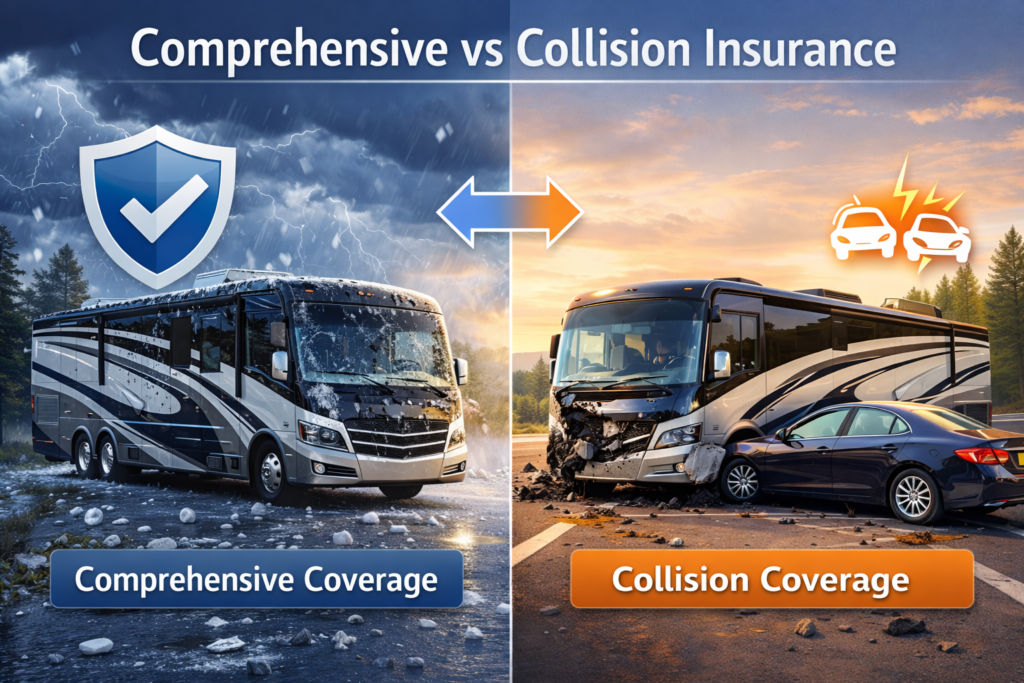
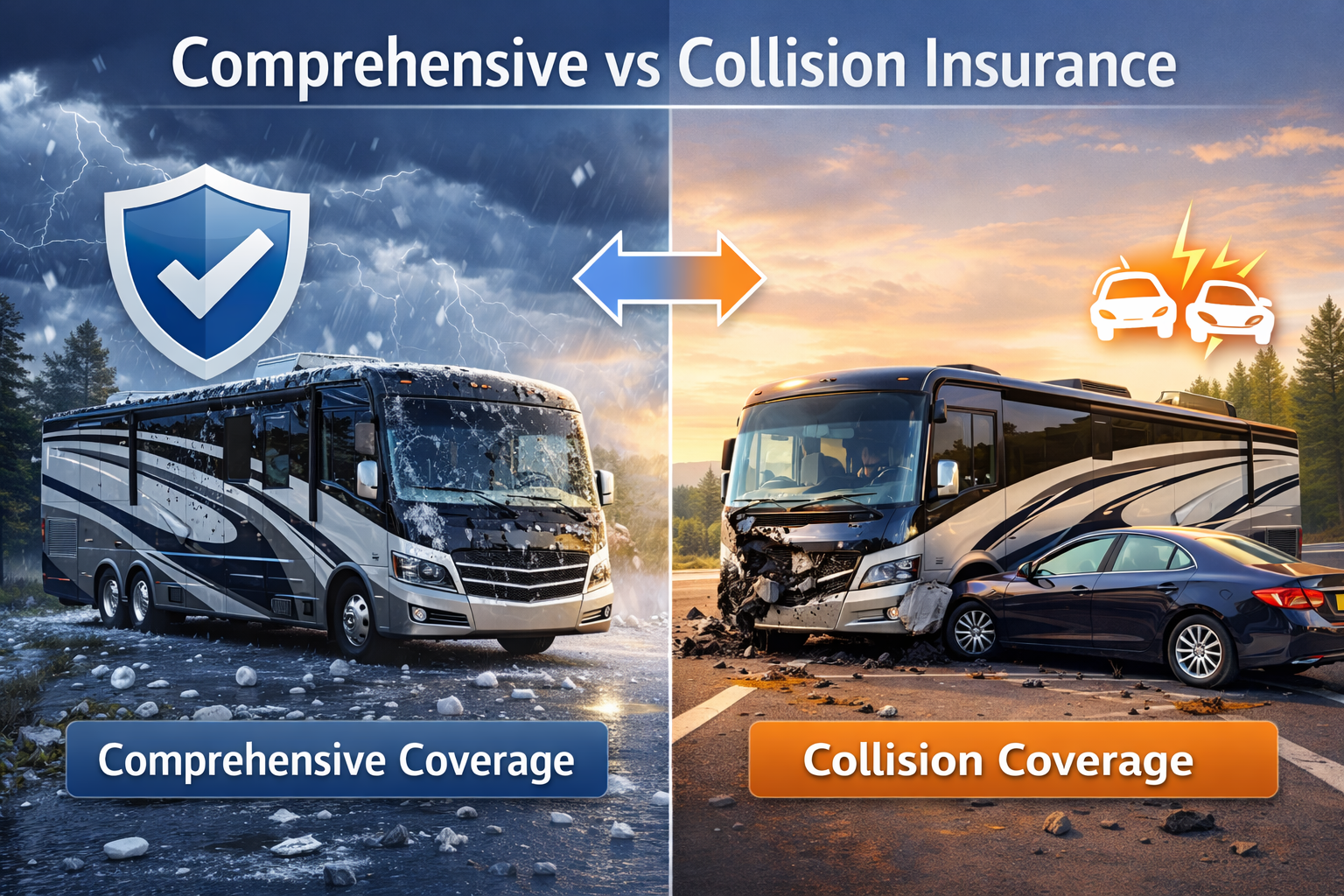
- Collision insurance pays for damage after driving accidents involving the RV.
• Comprehensive insurance pays for damage from non-collision events like storms, theft, vandalism, or fire.
RV comprehensive vs collision insurance simply refers to these two types of physical damage coverage that protect the RV itself.
Understanding the difference helps RV owners avoid coverage gaps and unexpected repair bills.
Quick Comparison
Feature | Collision Insurance | Comprehensive Insurance |
Covers accidents while driving | ✔ Yes | ❌ No |
Covers hail or storms | ❌ No | ✔ Yes |
Covers theft or vandalism | ❌ No | ✔ Yes |
Covers hitting objects | ✔ Yes | ❌ No |
Covers falling tree branches | ❌ No | ✔ Yes |
Most full coverage RV insurance policies include both protections together.
Coverage Authority Snapshot
RV insurance separates physical damage protection into two categories.
Collision Insurance
Collision coverage pays for damage caused when the RV hits another vehicle or object while driving.
Examples include:
- hitting a guardrail
• backing into a pole at a campsite
• colliding with another vehicle
• sliding into a barrier on wet roads
Comprehensive Insurance
Comprehensive coverage protects the RV from events that are not related to driving accidents.
Examples include:
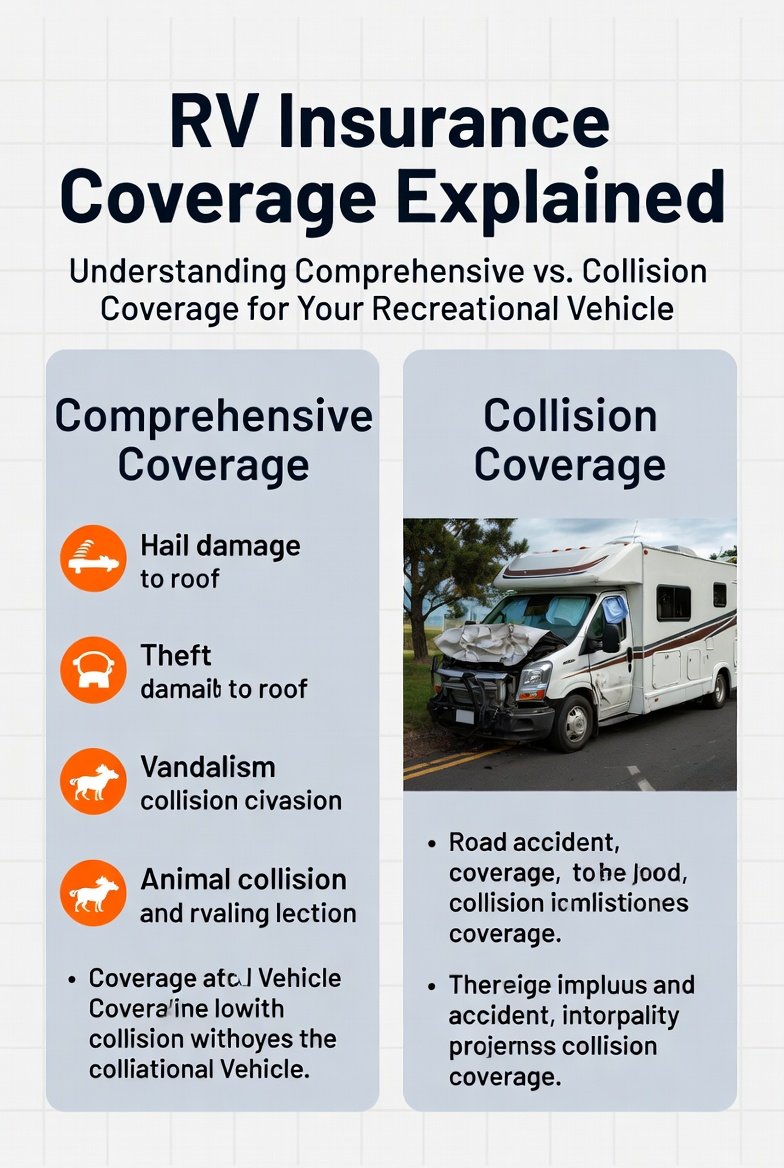
- hailstorms damaging the roof
• theft from a storage lot
• vandalism at a campground
• fire damage while parked
• falling tree branches during storms
Financed RVs usually require both collision and comprehensive coverage until the loan is paid off.
Real RV Claim Scenarios
Looking at real situations makes the difference easier to understand.
Scenario | Coverage Used |
RV backs into a tree at campground | Collision |
RV driver hits guardrail on wet road | Collision |
Hailstorm damages RV roof | Comprehensive |
RV stolen from storage lot | Comprehensive |
Tree branch falls on parked RV | Comprehensive |
Because RVs face risks both while driving and while parked, many owners choose to keep both protections.
Typical RV Repair Cost Examples
RV repairs can be significantly more expensive than normal car repairs because of large fiberglass panels, slide-outs, and specialized components.
Damage Type | Typical Repair Cost |
Hail damage to RV roof | $5,000 – $15,000 |
Slide-out mechanism repair | $3,000 – $8,000 |
Front collision damage | $8,000 – $25,000 |
Fiberglass body repair | $4,000 – $12,000 |
Because repair costs are high, many RV owners maintain comprehensive and collision coverage together.
More pricing examples are explained in the RV Insurance Cost Guide
Typical Cost Difference Between Comprehensive and Collision
Insurance premiums differ between these coverages because the risks are different.
Coverage Type | Premium Impact |
Collision insurance | Usually higher because accidents are more common |
Comprehensive insurance | Often lower because events are less frequent |
Both together | Included in many full coverage policies |
Collision coverage tends to cost more because driving accidents occur more frequently than theft or weather damage.
Which Claims Happen More Often?
The likelihood of claims varies depending on how the RV is used.
Collision claims often occur when RVs are:
- driven frequently
• used for long road trips
• operated in traffic or tight campsites
Comprehensive claims often occur when RVs are:
- parked outdoors for long periods
• stored in open lots
• exposed to storms, theft, or vandalism
Because RVs spend long periods parked, comprehensive coverage protects against risks that occur when the RV is not being driven.
If You Can Only Keep One Coverage
Some RV owners consider dropping one coverage to reduce premiums.
Situation | Coverage Usually More Important |
RV frequently driven | Collision |
RV stored outdoors | Comprehensive |
High storm or hail area | Comprehensive |
New motorhome worth $80k+ | Both recommended |
Older RV under $10k | Evaluate cost vs value |
For example, an RV stored outdoors in storm-prone regions may benefit more from comprehensive coverage.
However, newer or high-value RVs usually justify keeping both protections.
How Deductibles Affect Both Coverages
Both comprehensive and collision policies include deductibles.
Deductible | Premium Impact |
$250 | Higher monthly premium |
$500 | Moderate premium |
$1,000 | Lower premium |
Some RV owners choose different deductibles for each coverage.
Example strategies include:
- lower deductible for comprehensive if the RV is stored outdoors
• higher deductible for collision if the RV is driven less frequently
More details can be found in the RV Insurance Deductibles Guide
When Lenders Require Both Coverages
If an RV is financed, lenders typically require both collision and comprehensive insurance.
This protects the lender’s investment if the RV is damaged or destroyed before the loan is fully repaid.
Situations These Coverages May NOT Pay
Even full coverage RV policies include exclusions.
Examples may include:
- mechanical breakdown
• maintenance neglect such as roof seal failure
• mold damage from long-term leaks
• using recreational policies for full-time living
Understanding exclusions helps RV owners avoid denied claims.
See the RV Insurance Exclusions Guide
Why RV Owners Compare Multiple Insurance Quotes
Insurance premiums can vary significantly depending on several factors.
Common pricing factors include:
- RV value
• driver history
• storage location
• annual mileage
• travel frequency
Comparing multiple insurers often helps RV owners find lower premiums for the same coverage levels.
Related RV Insurance Guides
RV owners comparing coverage options often read these guides:
Together these pages explain how RV insurance policies work.
Quick Summary
- Collision insurance covers accidents involving the RV while driving.
• Comprehensive insurance covers storms, theft, vandalism, and other non-collision damage.
• Many RV owners keep both protections to cover the widest range of risks.
Understanding the difference helps RV owners choose coverage that matches their travel style and financial risk tolerance.