
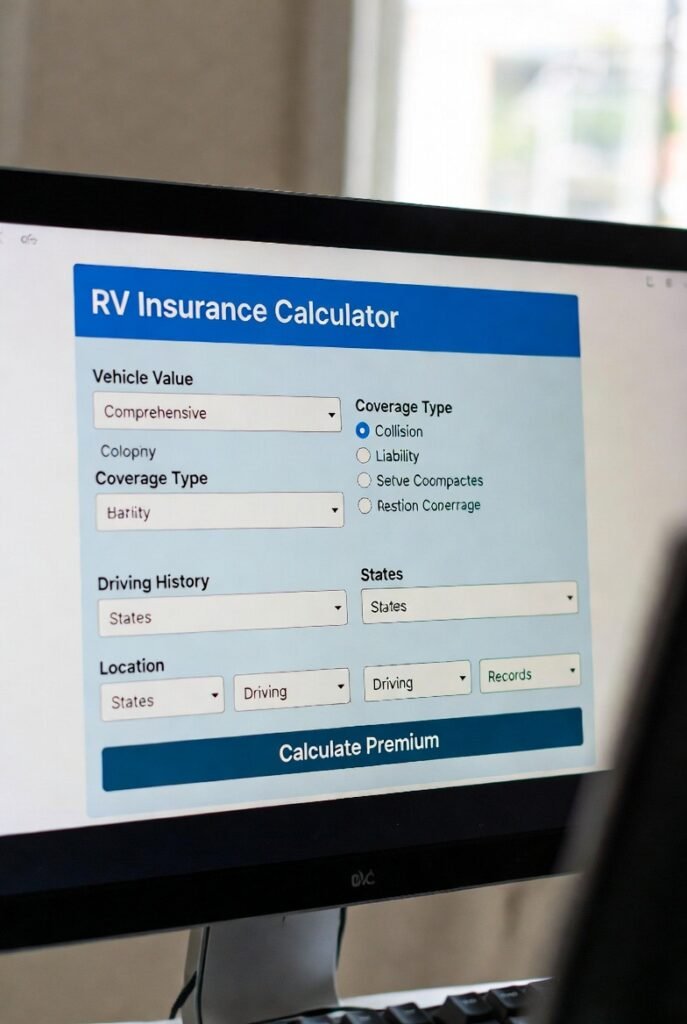
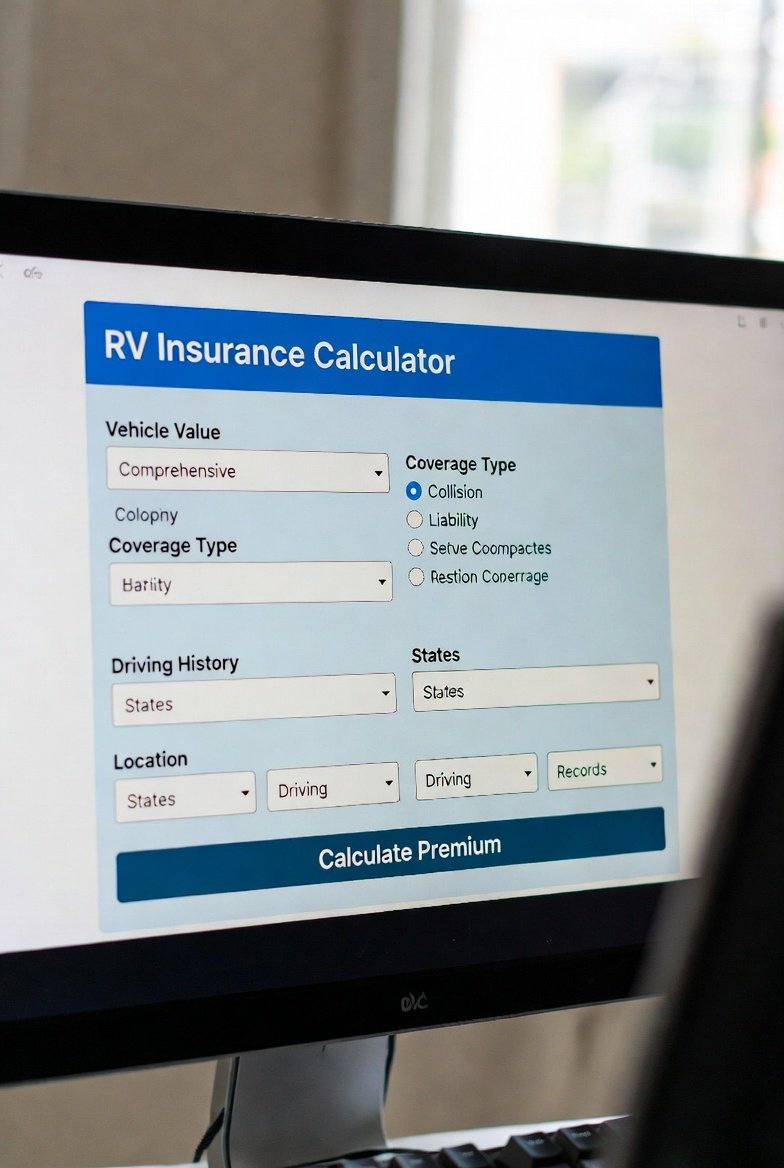
RV Insurance Calculator: Estimate Your Premium, Model Your Risk, and Predict Your Real Cost
RV Insurance Calculator: Estimate Your Real Premium Before You Quote
Stop Guessing — RV Insurance Is Predictable When You Understand the Math
Most buyers approach RV insurance backwards.
They request quotes first…
then try to understand why prices differ by hundreds — sometimes thousands — of dollars.
Professionals reverse that process.
They estimate first.
Then validate with quotes.
Because RV insurance is not random pricing.
It is structured risk modeling.
Once you understand the inputs insurers use, you can predict your premium bracket with surprising accuracy — often within 10–20%.
This calculator framework shows you exactly how to do that.
What This RV Insurance Calculator Actually Does
This is not a gimmick tool.
It is a risk estimator built around the same pricing pillars insurers evaluate:
- vehicle class
- replacement value
- usage intensity
- storage environment
- driver profile
- geographic exposure
- deductible strategy
- coverage structure
When these variables stack together, pricing becomes logical — not mysterious.
Use this model to set expectations before you ever speak to an agent.
Prepared buyers make better coverage decisions.
Start With the National Pricing Anchor
Every premium begins with a baseline.
Major insurers publicly indicate averages around:
- Travel trailers: about $500–$800 annually
- Motorhomes: roughly $1,000–$1,500 annually
High-value diesel pushers and luxury units can exceed $3,000 depending on risk factors.
Treat these numbers as gravitational center — not final pricing.
Everything else pushes your premium up or down.
Step-By-Step RV Insurance Calculator
Follow this sequence exactly. Skipping steps destroys accuracy.
Step 1 — Identify Your RV Class
Vehicle type is the strongest early predictor.
Travel Trailer / Towable
Lower liability exposure.
Often the cheapest category.
Baseline range:
👉 $500–$900
Class B / Class C
Moderate repair costs with vehicle-level liability.
Baseline range:
👉 $800–$1,600
Class A Motorhome
Highest severity risk — expensive repairs, larger claims.
Baseline range:
👉 $1,500–$3,500+
If your estimate already surprises you, remember:
Insurers price potential loss — not just probability.
Step 2 — Adjust for RV Value
Think of value as the fuel feeding the premium.
Use this quick multiplier:
RV Value — Adjustment
- Under $40k — minimal impact
- $40k–$80k — +10–20%
- $80k–$150k — +20–35%
- $150k+ — +40–70%
Luxury finishes, electronics, slide-outs, and specialty parts dramatically raise claim severity.
Replacement cost drives pricing.
Step 3 — Evaluate Usage Intensity
Insurers care deeply about how often the RV moves.
More miles = more exposure.
Recreational (occasional trips)
👉 baseline pricing
Frequent travel
👉 +10–25%
Full-time living
👉 +25–60%
Full-timers resemble homeowners from a liability perspective — insurers price accordingly.
Never misclassify usage.
It is one of the fastest ways to trigger claim disputes.
Step 4 — Model Your Storage Risk
Storage is one of the most underestimated pricing levers.
Yet it directly affects theft, weather exposure, and vandalism probability.
Storage Type — Expected Impact
- Indoor secured — −5–15%
- Covered facility — slight reduction
- Dedicated RV lot — neutral
- Driveway / street — +5–20%
Even seasonal storage patterns can influence underwriting.
Where the RV sleeps matters.
Step 5 — Apply Geographic Pressure
Location quietly reshapes premiums.
Insurers evaluate ZIP-level data for:
- storm frequency
- wildfire zones
- theft patterns
- repair costs
- litigation climate
High-catastrophe states often see:
👉 +15–40% adjustments
Low-density regions may experience modest reductions.
This explains why identical RVs can produce wildly different quotes.
Geography is pricing gravity.
Step 6 — Choose a Deductible Strategy
Deductibles function as a risk-sharing agreement.
Higher deductibles reduce premiums — but increase financial responsibility after a loss.
Typical pattern:
- raising deductible from $500 → $1,000 can lower premiums 5–10%
- jumping to $2,500 may reduce another 5–8%
But beware of over-optimizing.
Choose a deductible you could comfortably pay tomorrow.
Not just one that looks good on paper.
Step 7 — Build Your Coverage Stack
Coverage selection reshapes the premium more than almost any other lever.
Liability Only
Lowest premium — highest personal risk.
Standard Protection
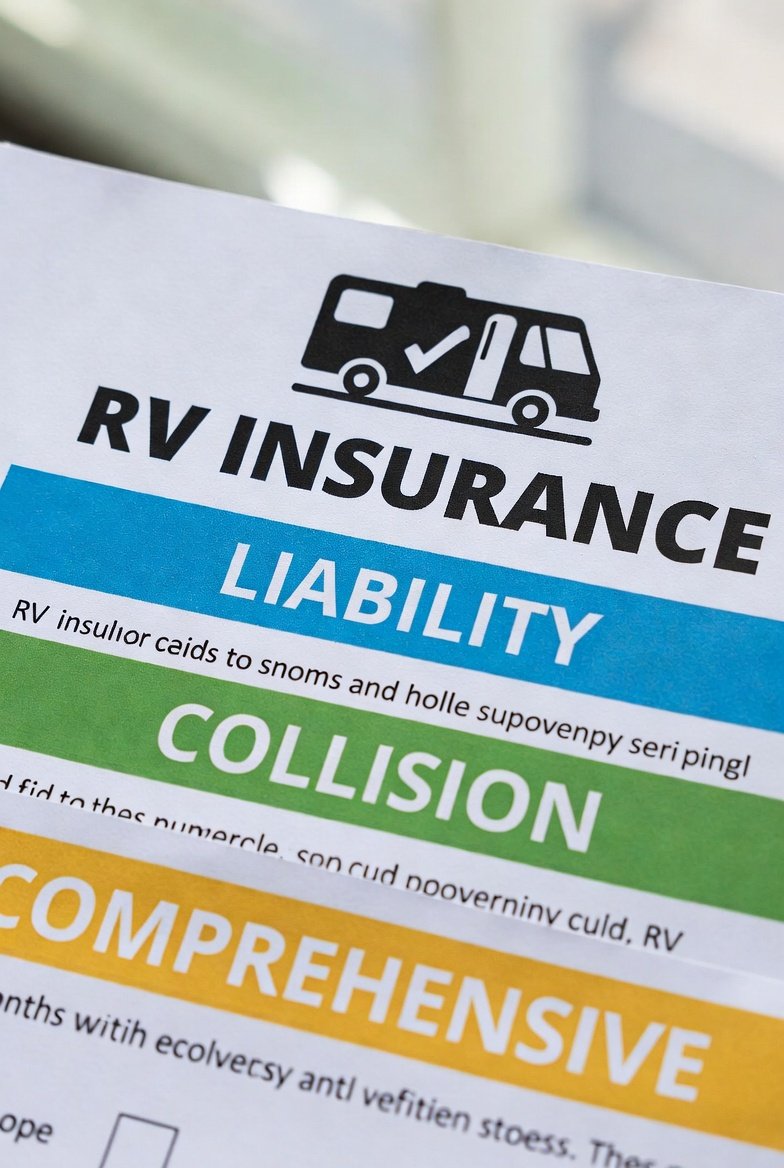
Rv Liability + collision + comprehensive.
Full Coverage Structure
Adds vacation liability, personal effects, roadside assistance, and emergency expense coverage.
Expect:
👉 Full coverage to cost 30–70% more than liability-only structures.
But the protection gap is enormous.
Serious buyers rarely strip coverage to chase small savings.
Run the Calculator — Example Scenarios
Scenario 1 — Moderate Risk Owner
Class C motorhome: $90k
Recreational usage
Dedicated RV lot
Mid-risk state
Estimated range:
👉 $1,200–$1,800 annually
Scenario 2 — High Exposure Profile
Class A motorhome: $180k
Full-time living
Driveway storage
Storm-prone ZIP
Estimated range:
👉 $2,800–$4,500+
Not unusual — simply risk-aligned pricing.
Scenario 3 — Budget Towable
Travel trailer: $35k
Occasional trips
Indoor winter storage
Estimated range:
👉 $500–$750
This is why towables dominate entry-level RV adoption.
Monthly Premium Estimator
To approximate monthly cost:
Divide annual premium by 12 — then expect minor installment fees from some carriers.
Examples:
- $600/year → about $50/month
- $1,200/year → about $100/month
- $3,000/year → about $250/month
Large swings usually trace back to risk inputs — not insurer inconsistency.
Mistakes That Destroy Estimate Accuracy
Even good calculators fail when assumptions are wrong.
Avoid these common errors:
- Understating RV value
- Best Rv insurance Companies
- Ignoring usage reality
- Comparing mismatched coverage
- Forgetting storage impact
Precision matters.
When Estimates and Quotes Don’t Match
A gap does not mean the calculator failed.
It usually signals one of three factors:
- underwriting nuances
- driver history variables
- carrier-specific pricing models
- Compare Rv insurance
Use estimates as planning brackets — not guarantees.
Quotes confirm reality.
How Professionals Shop RV Insurance
Before comparing prices, align the structure:
✔ match liability limits
✔ match deductibles
✔ match endorsements
✔ confirm valuation method
Only then does price comparison become meaningful.
Otherwise, you are evaluating different products.
Not better ones.
Advanced Insight — Annual Policies vs Usage Toggling
Some owners attempt to activate and cancel coverage around travel windows.
Sometimes it works.
Sometimes it costs more.
Why?
Insurers reward continuity and may apply fees for repeated policy changes.
If multiple trips are likely, maintaining coverage can be the smarter financial move.
Strategy beats reaction.
Potential Drawbacks of RV Insurance Calculators
Balanced decisions require acknowledging limitations.
Estimators cannot fully capture:
- credit-based Rv insurance scoring (where permitted)
- prior claims
- multi-policy discounts
- underwriting appetite shifts
Treat calculators as forecasting tools — not final pricing engines.
Bottom Line — Predict First, Quote Second
The smartest RV owners never enter the quoting process blind.
They model their risk.
They predict their bracket.
They align coverage before comparing prices.
Because once you understand how insurers think…
pricing stops feeling unpredictable.
Use this calculator to plan confidently — and approach quotes from a position of clarity, not surprise.