
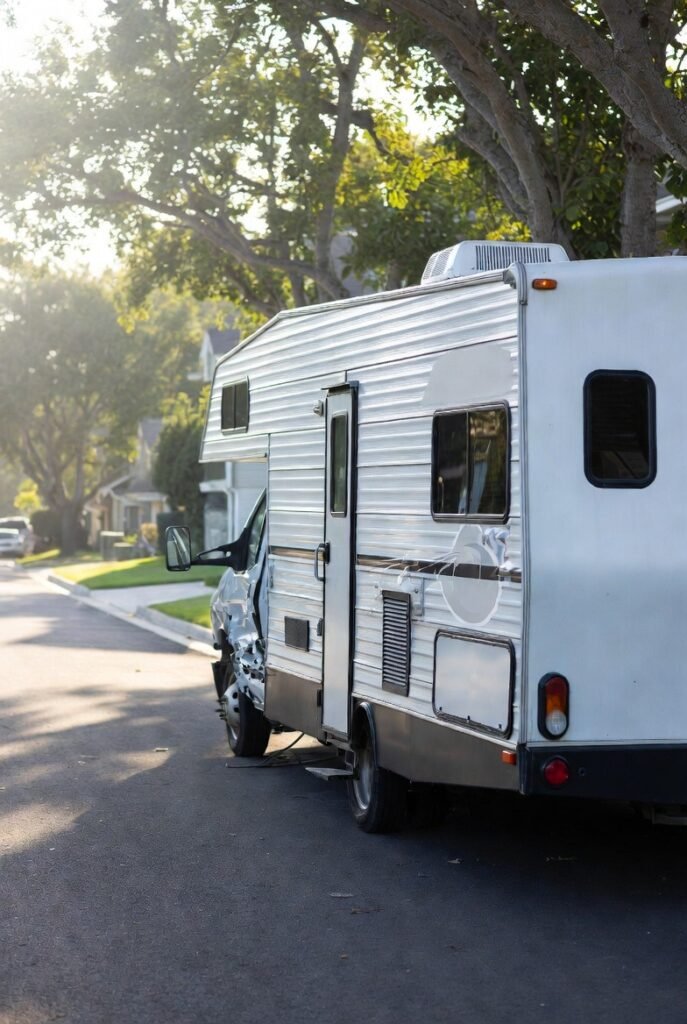
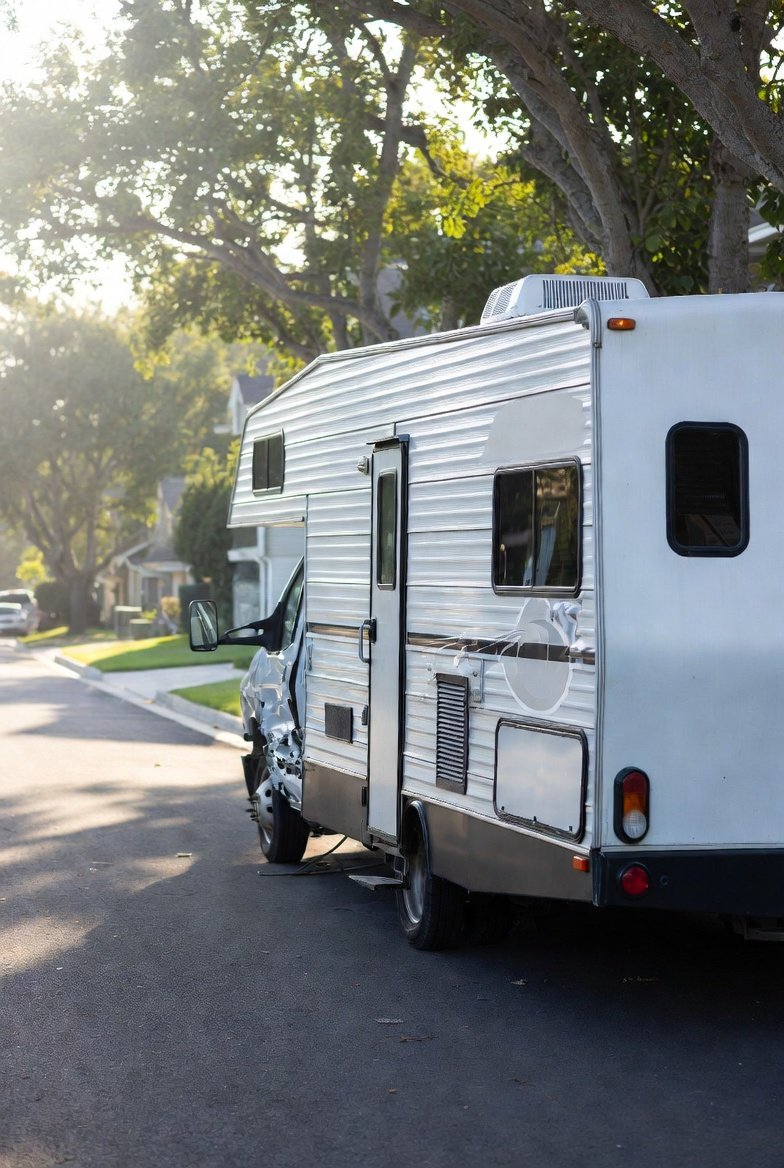
RV insurance claims process explained: step-by-step timeline, adjuster logic, payouts, and denial traps
RV insurance claims process — where preparation turns into financial protection
Most RV owners don’t study the claims process.
Until something goes wrong.
A collision on a mountain descent.
A hailstorm tearing through a storage lot.
A tree limb crashing onto the roof overnight.
The financial outcome of those moments is rarely determined by luck.
It is determined by coverage structure, documentation, and how you move through the claims process.
Many people imagine claims as customer service events.
They are not.
They are structured financial investigations designed to answer three questions:
- Was the loss covered?
- What caused it?
- What is the verified financial value?
Understanding this before you ever file a claim changes your posture from reactive to strategic.
Owners who understand the process typically experience:
- faster settlements
- fewer disputes
- less adjuster friction
- smaller financial surprises
If you haven’t reviewed your protection recently, start with Rv insurance cost because claims performance begins long before the accident.
Quick reality check — what most people misunderstand about RV claims
- Filing a claim does NOT automatically raise your premium
- Adjusters are investigators, not adversaries
- Speed comes from documentation
- Most delays are structural — not personal
- Cheap policies often create expensive claims
Keep these anchors in mind as we walk through the real timeline.
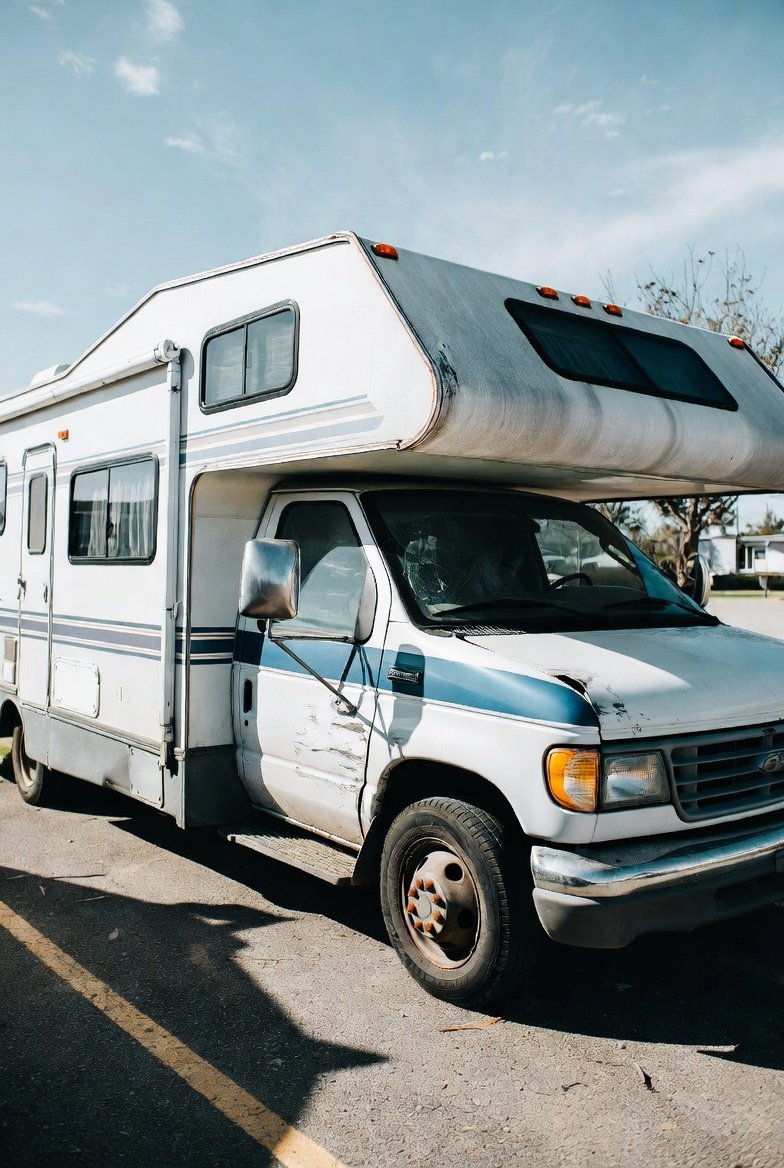
The RV insurance claims timeline — from incident to payout
Below is the macro sequence almost every RV claim follows.
Phase — What Happens — Typical Owner Action — Risk if Mishandled
- Incident — Damage occurs — Ensure safety, document — Lost evidence
- First Notice — Claim is opened — Provide facts only — Statement conflicts
- Coverage Review — Policy verified — Answer clearly — Classification issues
- Inspection — Adjuster evaluates — Share photos/docs — Under-scoped damage
- Estimate — Repair value set — Ask questions — Hidden costs missed
- Decision — Repair vs total — Prepare financially — Shock from valuation
- Settlement — Payment issued — Confirm details — Deductible surprise
- Repair / Close — Claim ends — Review policy — Repeat risk
Most anxiety disappears once you realize the process is predictable.
Not chaotic.
Stage 1 — Immediate response: protect people, then evidence
Safety always outranks documentation.
Call emergency services when needed.
Once safe, shift quickly into evidence mode.
Photograph:
- vehicle positions
- damage angles
- road or campsite conditions
- weather
- surrounding property
- license plates
Take more photos than you think you need.
You cannot recreate a scene later.
Critical rule many owners miss
If safe, prevent further damage.
Temporary roof covering after hail.
Tarping a broken window.
Moving the RV away from rising water.
Insurers expect reasonable mitigation — and they typically reimburse those expenses when documented.
Save every receipt.
Stage 2 — File the claim quickly (but calmly)
Report the claim as soon as practical.
Delays create uncertainty — and uncertainty slows approvals.
You’ll usually provide:
- policy number
- time and location
- description of events
- involved parties
- photos
Avoid speculation.
Facts age well.
Guesses create friction.
You’ll receive a claim number — the financial container for everything that follows.
What to say (and what not to say) during the first call
Say:
- objective facts
- observable damage
- confirmed timeline
Avoid:
- admitting fault prematurely
- guessing speeds or causes
- minimizing damage
- exaggerating impact
Adjusters compare statements with physical evidence.
Consistency accelerates claims.
Stage 3 — Coverage verification happens before money is discussed
Before evaluating payment, insurers confirm alignment:
- policy active
- vehicle listed
- usage classification accurate
- endorsements attached
- deductible confirmed
One of the biggest friction triggers?
Usage mismatch.
Policy says recreational.
Reality shows full-time living.
This doesn’t guarantee denial — but it invites deeper investigation.
Accuracy protects velocity.
Stage 4 — Meet the adjuster (and understand their real job)
Adjusters are financial evaluators trained to answer:
- what caused the damage
- whether coverage applies
- what repairs should cost
- whether totaling is economical
Their priority is not speed.
Their priority is accuracy.
Help them achieve that — and speed usually follows.
Respond quickly to requests.
Provide documents fast.
Ask clarifying questions.
Claims move at the pace of information.
What adjusters actually analyze
Expect cross-checking between:
- your statement
- physical damage patterns
- photos
- police reports
- weather data
- witness accounts
When these align → claims accelerate.
When they conflict → investigations deepen.
Consistency is a hidden speed lever.
Stage 5 — Inspection: why RV claims differ from auto
RVs are complex structures.
Damage often hides behind walls, under flooring, or within roof assemblies.
Inspection may occur:
- in person
- via approved repair facilities
- through digital photo estimation
Initial estimates frequently expand after teardown.
This is normal — not incompetence.
Water intrusion alone can turn a small repair into a major structural job.
RV-specific reality most blogs ignore
Unlike passenger cars, RV repairs often involve:
- custom parts
- extended supplier timelines
- oversized service bays
- specialty technicians
After large storms, repair queues can stretch for months.
This is capacity — not neglect.
Planning emotionally for longer timelines prevents unnecessary stress.
Repair vs total loss — the financial fork in the road
Insurers evaluate a repair-to-value ratio.
When repair costs approach a large percentage of the RV’s market value, totaling becomes more likely.
Why?
Because near-total repairs create reliability concerns.
Total loss is not claim failure.
It is economic logic.
How valuation actually works
Your payout depends heavily on policy structure.
Actual Cash Value (ACV)
Market value minus depreciation.
Older RV → smaller payout.
Replacement Cost
Pays according to replacement terms.
Higher premium.
Lower financial shock.
If you want deeper structure guidance, revisit Rv insurance cost after this article.
Claims reveal whether coverage decisions were wise.
Mini scenario — identical storm, very different financial endings
Owner A selected ACV and a $5,000 deductible.
A hailstorm totals their motorhome.
Depreciation reduces value.
Deductible reduces payout again.
Unexpected gap.
Owner B chose replacement cost with a moderate deductible.
Same storm.
Radically different recovery.
Insurance quotes structure only becomes visible during claims.
Snippet Answer — How long do RV claims usually take?
Most straightforward claims resolve within a few weeks, while severe damage, specialty repairs, or catastrophe backlogs can extend timelines significantly.
Speed is driven less by luck — and more by documentation, inspection complexity, and repair capacity.
The most common causes of claim delays
Nearly all delays trace back to predictable friction points:
- incomplete documentation
- unclear incident narratives
- classification questions
- repair bottlenecks
- parts shortages
- catastrophe volume
Understanding this converts frustration into expectation management.
Should you obtain your own repair estimate?
Often helpful.
Independent estimates can:
- validate scope
- identify hidden damage
- support valuation conversations
Just coordinate with your adjuster.
Surprises slow claims.
Alignment speeds them.
Four RV scenarios smart owners mentally rehearse
Hail roof impact
Exterior damage looks minor.
Water infiltration appears weeks later.
Documentation matters early.
Towable trailer backing collision
Frame stress isn’t always visible.
Inspections must be thorough.
Campsite liability incident
Visitor trips over your power cable.
Liability coverage activates — not collision.
Wildfire smoke damage
Interior contamination can trigger complex cleaning or replacement decisions.
Not all losses are visually dramatic.
But they are financially real.
If your claim stalls, gets disputed, or faces denial
Stay procedural — not emotional.
Escalation typically follows this ladder:
- Request written explanation
- Provide supporting documentation
- Ask about internal review
- Use appraisal provisions when applicable
- Contact state consumer resources if needed
Evidence wins disputes.
Emotion rarely does.
Will a claim raise your premium?
Sometimes.
Not always.
Insurers evaluate patterns — not isolated events alone.
Severity, frequency, and fault dynamics influence underwriting decisions.
Trying to predict exact renewal impact is less useful than focusing on strong coverage.
After the payout — the step disciplined owners never skip
Review your policy.
Ask:
- Were limits adequate?
- Did the deductible feel manageable?
- Would replacement cost have helped?
Claims are feedback loops.
Use them to upgrade protection before the next risk cycle.
Then revisit Rv insurance to align protection with budget intelligently.
Three habits that make future claims dramatically smoother
- Photograph your RV annually
Inside and out. - Digitally store upgrade receipts
Solar installs. Electronics. Suspension upgrades.
Valuation improves when proof exists. - Review coverage every year
Risk evolves.
Policies should too.
Limitations worth understanding
Insurance transfers financial shock.
It does not eliminate inconvenience.
Even well-run claims involve:
- paperwork
- inspection
- waiting
- coordination
Prepared owners experience less psychological stress because nothing feels unexpected.
Decision matrix — how disciplined owners approach claims readiness
- Best for low stress: replacement cost + moderate deductible
- Best for asset protection: higher liability limits
- Best for frequent travelers: roadside + emergency expense
- Best for financed RVs: gap protection
Coverage architecture determines recovery speed.
Not advertising slogans.
Bottom line — the claims process rewards preparation
The RV insurance claims process is not something to fear.
It is something to understand before you need it.
Owners who prepare typically experience:
- faster settlements
- fewer disputes
- stronger financial recovery
Before comparing quotes at /compare-rv-insurance-quotes/, remember:
The cheapest policy is meaningless if it struggles during a claim.
Preparation is invisible — until the day it protects you.