
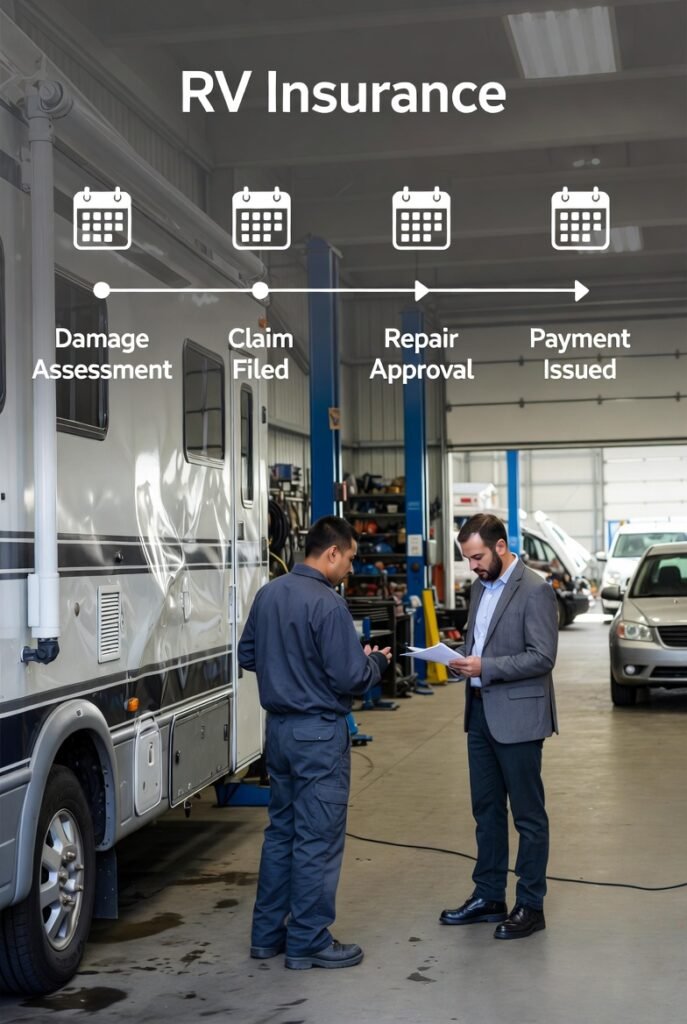
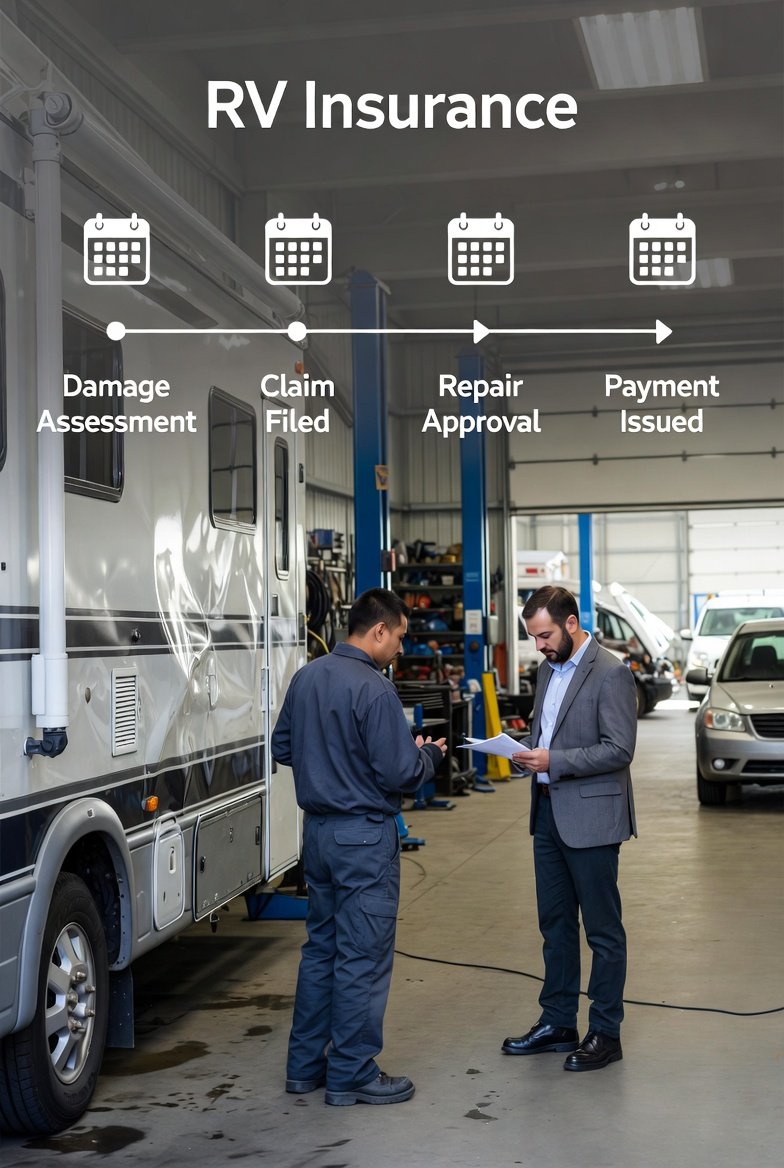
RV Insurance Claim Timeline: How Long RV Claims Actually Take
After an RV accident or damage event, most owners ask the same question:
“How long will the insurance claim take?”
The answer depends on more than just the insurer.
RV claims move through several stages:
- claim reporting
• adjuster review
• inspection
• repair estimate evaluation
• settlement approval
Because RVs are more complex than normal vehicles, the claim process can take longer than standard auto insurance claims.
Understanding the claim timeline helps RV owners prepare for what happens after a loss.
Quick Answer
Most RV insurance claims take several days to a few weeks to complete. Simple claims may resolve quickly, while complex claims involving large repairs, investigations, or total-loss evaluations may take longer.
Typical RV Insurance Claim Timeline
A normal RV claim usually follows this sequence:
- Claim reported — same day
- Adjuster assigned — within 1–3 days
- RV inspection — within several days
- Repair estimate review — several days to a week
- Settlement or repair approval — often within 1–3 weeks
Each stage helps the insurer verify the cause of damage and determine the correct payment.
How Claim Severity Changes the Timeline
Not all RV claims take the same amount of time.
Claim Type | Typical Timeline |
Minor cosmetic damage | a few days |
Moderate repair claims | 1–3 weeks |
Structural repair claims | several weeks |
Total loss claims | several weeks or longer |
Small claims move faster because fewer inspections and estimates are required.
Large claims often require more detailed evaluation.
Step-by-Step RV Claim Processing Timeline
Step 1 — Claim Is Reported
The first step is reporting the loss to the insurer.
This can happen through:
- insurer mobile app
• online claim portal
• claims hotline
The insurer records:
- policy number
• date of the incident
• damage description
• photos of the RV
Quick reporting helps prevent delays.
Step 2 — Claims Adjuster Is Assigned
Within one to three days, the insurer usually assigns a claims adjuster.
The adjuster reviews:
- the cause of damage
• whether the policy covers the loss
• the severity of the damage
Understanding coverage types can be helpful at this stage.
The coverage explanation guide at
rv-insurance-coverage-explained
shows how collision, comprehensive, and liability coverage apply to RV incidents.
Step 3 — RV Inspection
The adjuster must verify the damage.
Inspection methods may include:
- in-person inspection
• photo inspection
• inspection at a repair facility
This step usually occurs within several days.
However, scheduling delays sometimes occur when RV repair shops are busy.
Step 4 — Repair Estimate Review
Once the inspection confirms the damage, repair estimates are evaluated.
The insurer may:
- approve the shop estimate
• request additional estimates
• review parts pricing
• verify labor costs
RVs often require specialized repair facilities, which can slow the estimate process.
Step 5 — Settlement or Repair Authorization
After the estimate is approved, the insurer calculates the settlement.
The payout depends on:
- repair cost
• deductible
• coverage limits
For example:
A $5,000 repair with a $1,000 deductible may result in a $4,000 insurance payment.
Deductibles directly affect how much the insurer pays.
The deductible explanation guide at
rv-insurance-deductibles-explained
shows how this works.
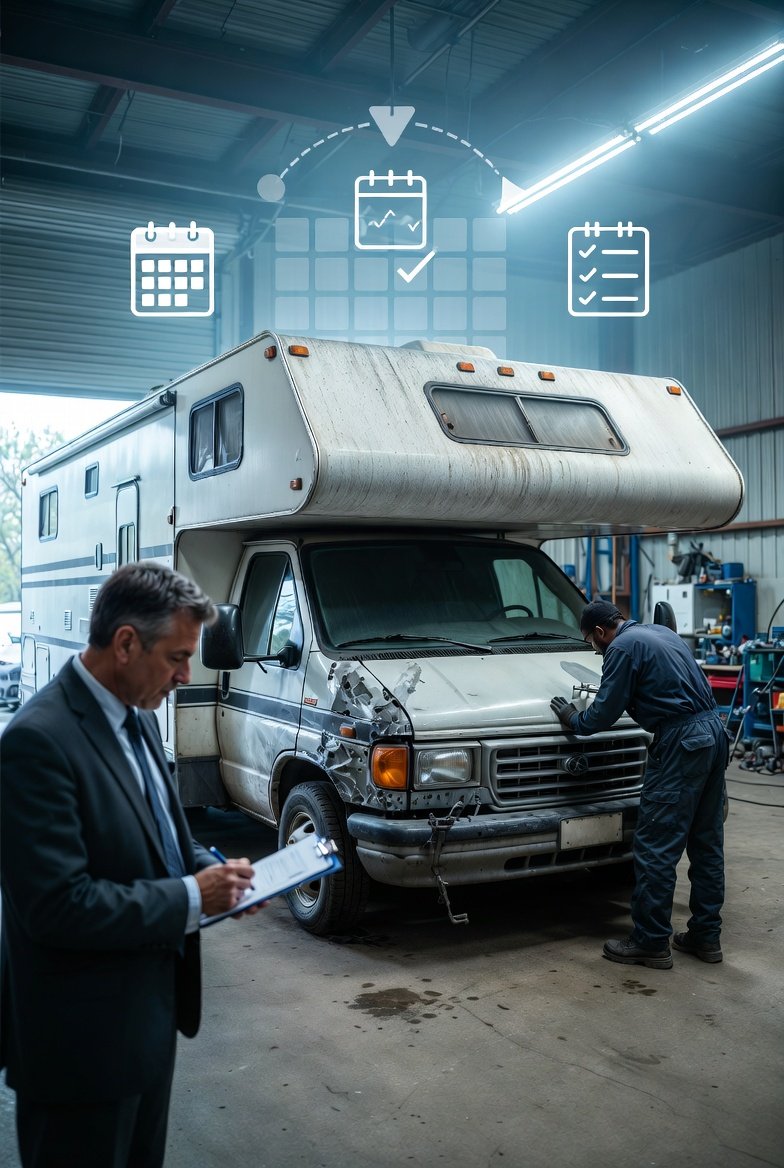
Example RV Claim Timeline
Campground Collision Example
An RV backs into a campsite utility post.
Estimated damage: $4,200
Example timeline:
Event | Time |
Claim reported | Day 1 |
Adjuster assigned | Day 2 |
Inspection completed | Day 4 |
Estimate approved | Day 9 |
Payment issued | Day 12 |
This represents a typical moderate claim.
Investigation Timeline for Complex Claims
Some RV claims require additional investigation.
This usually happens when:
- the cause of damage is unclear
• the policy coverage is disputed
• large repairs are involved
Investigation Stage | Typical Time |
Claim filed | Day 1 |
Inspection | Day 3 |
Investigation review | 1–2 weeks |
Final decision | varies |
Investigations are less common but can extend the claim timeline.
Total Loss Claim Timeline
When an RV is declared a total loss, the process changes.
Instead of repair estimates, the insurer determines the RV’s value.
Total Loss Stage | Typical Time |
Claim filed | Day 1 |
Damage inspection | within days |
valuation review | 1–2 weeks |
settlement negotiation | several days |
payment issued | varies |
Total loss claims may take longer because the insurer must determine the RV’s actual value.
Why RV Claims Sometimes Take Longer
Several factors can extend the claim process.
Cause of Delay | Why It Slows Claims |
parts shortages | repairs cannot begin |
repair shop backlog | inspection delays |
unclear documentation | adjuster needs more proof |
coverage disputes | policy review required |
large storm events | insurers receive many claims |
These delays are not unusual for RV insurance claims.
How RV Owners Can Speed Up the Claim Process
Some delays can be avoided.
RV owners can speed up claims by:
- reporting the claim immediately
• taking clear photos of damage
• providing detailed incident descriptions
• obtaining repair estimates quickly
• cooperating with the adjuster
Strong documentation often makes the process smoother.
Storage Damage Claims May Follow a Different Timeline
When damage occurs while an RV is parked in storage, insurers review comprehensive coverage.
The storage coverage guide at
explains how protection works when the RV is not being driven.
Breakdowns That Lead to Insurance Claims
Sometimes an RV breakdown becomes an insurance claim.
For example:
- a roadside incident exposes structural damage
• towing reveals hidden damage
• emergency repairs trigger a claim
Roadside assistance may handle the immediate breakdown.
The emergency coverage guide at
explains how roadside coverage works during these situations.
Common Mistakes That Delay RV Insurance Claims
Claim Mistake | Why It Causes Delays |
late claim reporting | harder to verify damage |
poor documentation | adjuster needs more evidence |
missing repair estimates | settlement cannot be calculated |
coverage misunderstandings | insurer reviews policy terms |
Avoiding these mistakes can shorten the claim timeline.
RV Claim Preparation Checklist
Before filing a claim, verify:
- the damage appears covered
• photos are available
• incident details are accurate
• repair estimates are prepared
• deductible amount is understood
Preparing this information helps prevent unnecessary claim delays.
FAQ
How long does an RV insurance claim take?
Most RV insurance claims take several days to a few weeks, depending on inspection scheduling, repair estimates, and claim complexity.
Why do RV claims take longer than car claims?
RVs require specialized repairs and inspections, which can slow the claim process compared with normal vehicles.
What delays RV insurance claims the most?
Repair shop backlogs, parts shortages, and missing documentation are common causes of delays.
Do total loss RV claims take longer?
Yes. Total loss claims often take longer because the insurer must determine the RV’s value before issuing payment.