
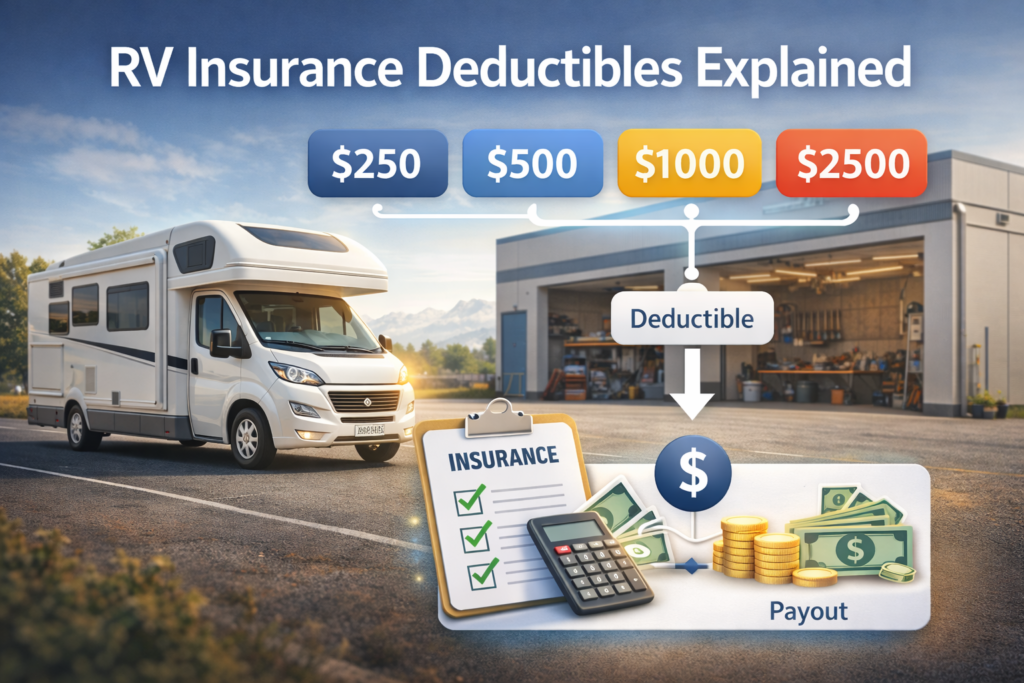
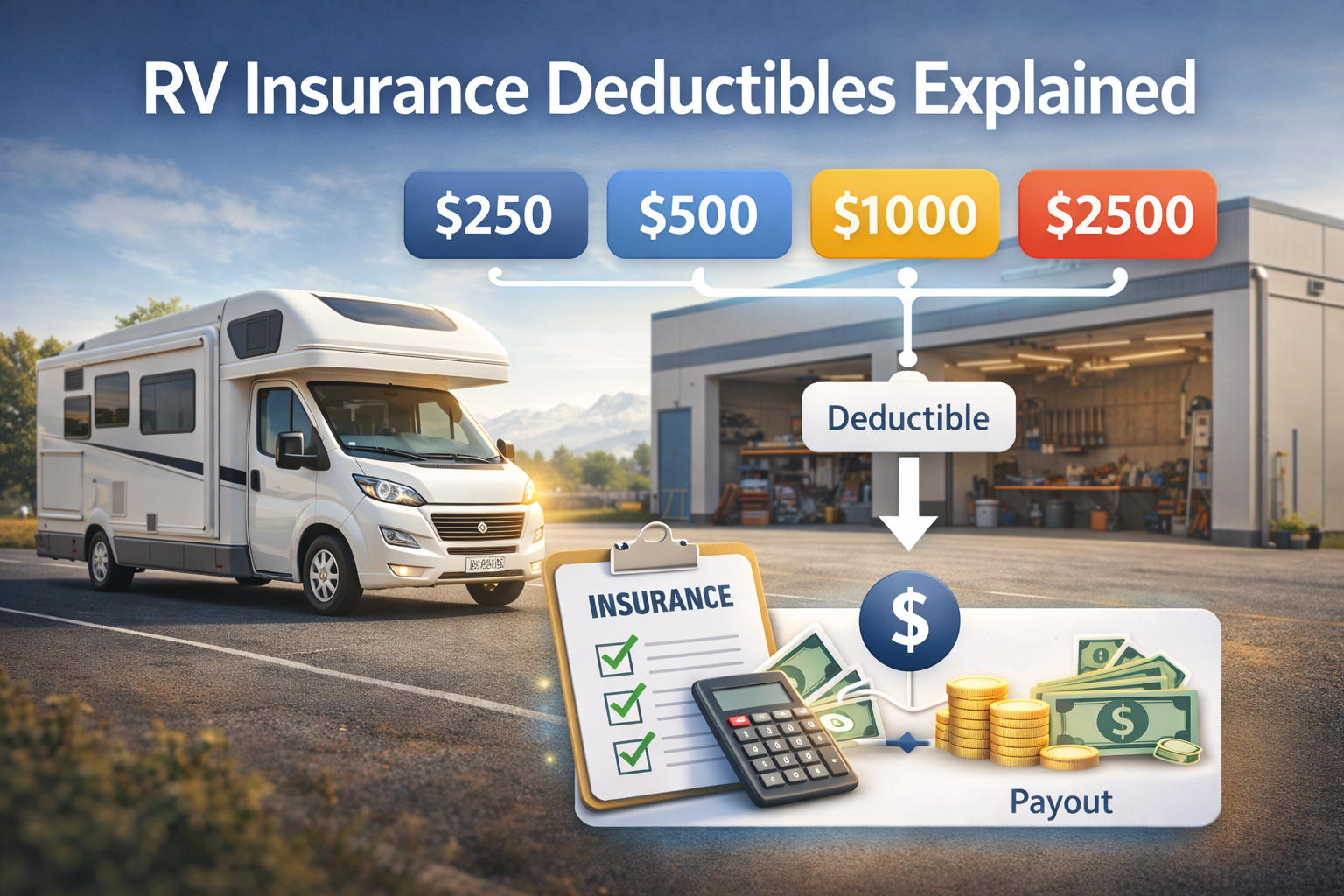
RV Insurance Deductibles Explained: How Much Should You Choose?
A parked RV gets hit by a hailstorm overnight.
The repair estimate comes back at $7,400.
If the deductible on the policy is $500, insurance covers most of it.
If the deductible is $2,000, the owner pays four times more out of pocket.
That single number inside the policy — the RV insurance deductible — often determines whether a claim feels manageable or financially painful.
Many RV owners focus only on the premium when choosing a deductible. But the deductible controls how much risk you personally carry during a claim.
Understanding rv insurance deductibles means knowing:
- when they apply
• how they affect premiums
• how to choose the right level for your RV’s value and usage
If you want the full structure of RV policies first, see:
rv-insurance-coverage-explained
What RV Insurance Deductibles Actually Mean
An insurance deductible is the portion of a covered loss that the RV owner must pay before the insurer contributes.
For RV policies, deductibles usually apply to physical damage coverage, which includes:
- collision coverage
• comprehensive coverage
Liability coverage typically works differently. It pays for damage or injuries to others and normally does not involve the same deductible structure.
Progressive and GEICO both explain that collision and comprehensive coverage pay repair or replacement costs minus the deductible chosen by the policyholder.
RV Insurance Deductible Coverage Map
Coverage Type | Deductible Applies | Example |
Collision | Yes | RV backs into a pole |
Comprehensive | Yes | Storm damages roof |
Liability | Usually no | RV damages another vehicle |
Glass / windshield | Sometimes separate | Cracked windshield |
Roadside assistance | Usually no | Tow or breakdown |
To understand the difference between the two main types of RV physical damage coverage, see:
RV Collision vs Comprehensive Deductible
Collision deductible
Collision coverage applies when the RV hits another vehicle or object.
Examples include:
- backing into campground posts
• hitting a guardrail
• striking another vehicle
• hitting a tree during a turn
Example:
Repair cost: $8,000
Deductible: $1,000
Insurance pays $7,000, and the RV owner pays the deductible.
Comprehensive deductible
Comprehensive coverage applies to non-collision damage.
Examples include:
- hail damage
• falling branches
• theft
• vandalism
• fire
• flood-type weather damage
Many insurers note that a significant share of RV claims occur while the vehicle is parked or stored, which makes comprehensive coverage especially important.
Verify: Many policies allow different deductible levels for collision and comprehensive coverage.
Typical RV Insurance Deductible Options
Most RV insurers offer several deductible choices.
Deductible | Premium Impact | Claim Impact |
$250 | Highest premium | Lowest out-of-pocket risk |
$500 | Moderate premium | Balanced |
$1,000 | Lower premium | Higher claim cost |
$2,000+ | Lowest premium | Highest personal exposure |
Higher deductibles usually reduce insurance premiums because the insurer assumes less claim risk.
To see how deductibles influence total policy pricing, see:
Deductible Decision Table (What Most Owners Choose)
Pricing tables explain numbers.
Decision tables explain what to do.
RV Value | Recommended Deductible | Reason |
Under $10,000 | $1,000–$2,000 | Repairs rarely justify low deductible |
$10,000–$50,000 | $500–$1,000 | Balanced protection |
$50,000–$150,000 | $500 | Repairs become expensive |
$150,000+ motorhome | $250–$500 | High repair costs |
💡 Quick insight: Expensive motorhomes usually benefit from lower deductibles because even moderate damage can be costly.
How RV Deductibles Affect Premiums
Higher deductibles reduce premiums because policyholders take on more risk.
Typical premium patterns look like this:
Deductible | Premium Direction |
$250 | Highest |
$500 | Moderate |
$1,000 | Lower |
$2,000 | Lowest |
However, cheaper premiums do not always mean better protection.
A deductible that is too high may create a financial shock when damage occurs.
Choosing the Right Deductible (Step-by-Step)
Step 1 — Determine the RV’s value
Older campers and travel trailers may justify higher deductibles.
Step 2 — Evaluate repair risk
Motorhomes often have higher repair costs than small trailers.
Step 3 — Check how the RV is used
Full-time use, long road trips, and outdoor storage increase claim exposure.
Step 4 — Compare premium differences
Ask insurers for quotes at multiple deductible levels.
Step 5 — Choose the deductible you can comfortably pay
The right deductible should never create financial stress during a claim.
Example Claim Scenario
An RV owner selects a $2,000 deductible to reduce premiums.
Six months later, hail damages the roof and side panels.
Repair estimate: $6,800
Insurance covers most of the repair, but the owner still pays $2,000 out of pocket.
Many RV owners only realize the impact of deductible choices after a real claim occurs.
When Filing a Claim May Not Be Worth It
Sometimes filing a claim does not make financial sense.
Example:
Repair cost: $1,200
Deductible: $1,000
Insurance pays only $200.
In situations like this, some RV owners choose to pay for repairs themselves.
Claim situations and denials can also occur when coverage conditions are misunderstood. For more context, see:
Common RV Deductible Mistakes
- Choosing a high deductible just to lower premiums
- Ignoring storage risks such as storms or theft
- Using the same deductible logic for all RV types
- Filing small claims barely above the deductible
- Selecting deductibles larger than available emergency funds
Policy exclusions can also affect claims. See:
Quick Decision Guide
Situation | Best Deductible |
Class A motorhome | $250–$500 |
Travel trailer | $500 |
Older RV | $1,000+ |
Seasonal storage | $500–$1,000 |
Best overall: $500
Best for expensive motorhomes: $250–$500
Best for older RVs: $1,000+
FAQ
Do RV insurance deductibles apply to liability claims?
No. Liability coverage usually pays for damage to others without requiring the policyholder to pay a deductible.
Can collision and comprehensive deductibles be different?
Yes. Many RV insurance policies allow separate deductible levels for collision and comprehensive coverage.
Does the deductible apply to storm damage during RV storage?
Yes. Storm damage typically falls under comprehensive coverage, which requires the comprehensive deductible.
Can I change my deductible during the policy period?
Many insurers allow deductible changes at renewal or during policy updates.
How often should RV owners review their deductible?
It is wise to review deductible levels when renewing a policy or whenever the RV’s value or usage changes.