
RV Insurance Add-Ons Explained: Which Riders Are Actually Worth It?
An RV breaks down late at night on a remote highway.
The nearest heavy-duty tow truck charges $850 just to move a Class A motorhome to the closest repair shop.
Without roadside assistance coverage, the entire cost comes out of pocket.
Situations like this are exactly why RV insurance add-ons exist.
Basic RV insurance policies usually include liability, collision, and comprehensive coverage. But many real-world risks — campsite injuries, personal belongings, roadside breakdowns, or extended travel disruptions — are covered through optional riders or add-ons.
Understanding rv insurance add-ons means knowing:
- what each rider actually covers
• when the protection matters
• when the add-on may not be necessary
If you want to understand the core policy structure first, see:
v-insurance-coverage-explained
What RV Insurance Add-Ons (Riders) Actually Are
RV insurance add-ons are optional policy features that extend protection beyond the base policy.
Insurance companies call them riders, endorsements, or optional coverages.
A standard RV policy typically includes:
- liability coverage
• collision coverage
• comprehensive coverage
Add-ons expand that protection to cover situations that basic policies may not fully address.
Examples include:
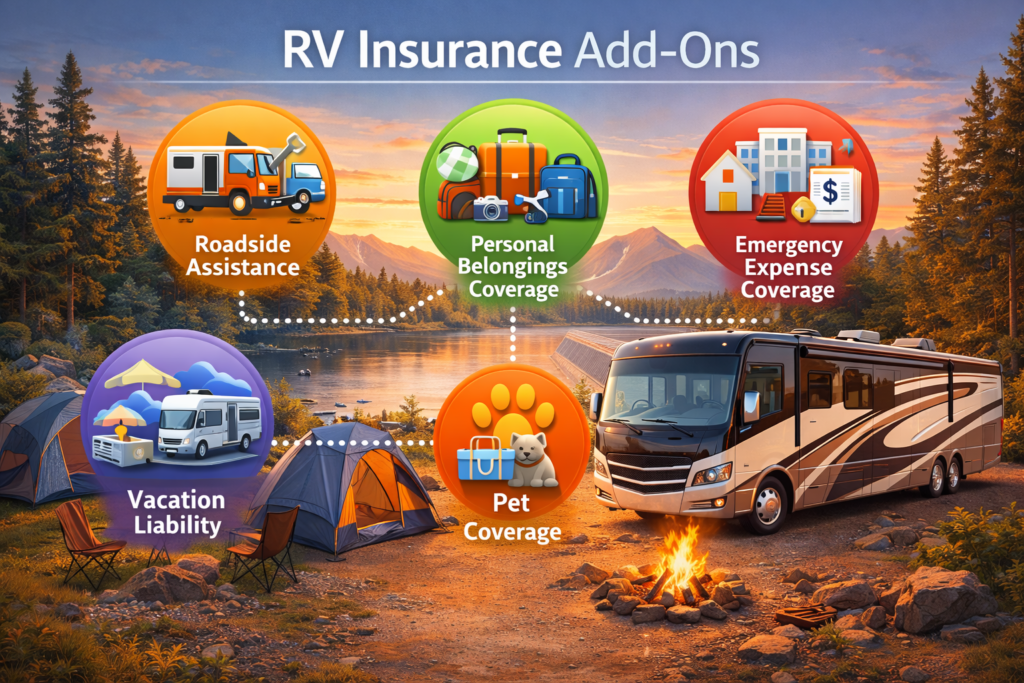
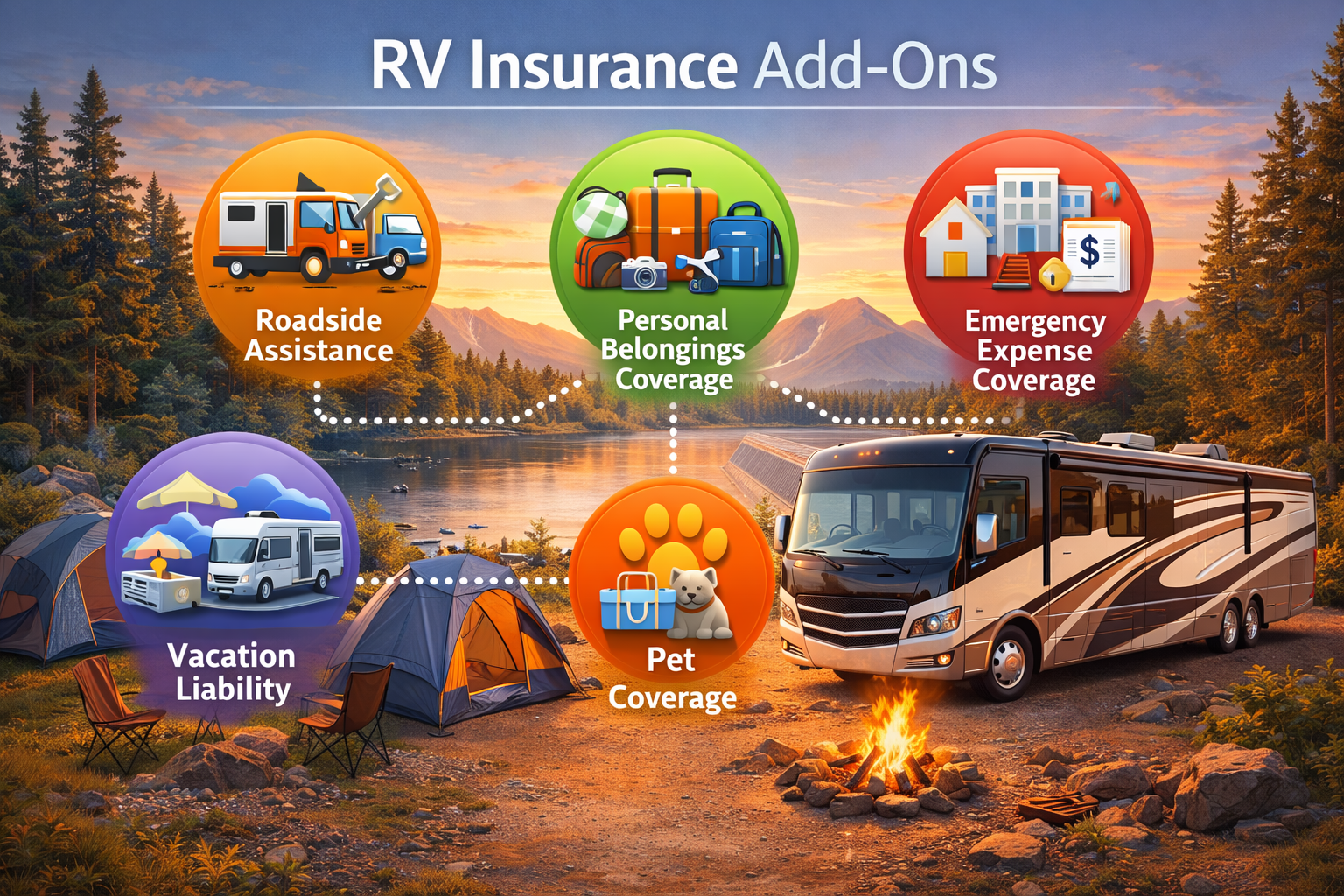
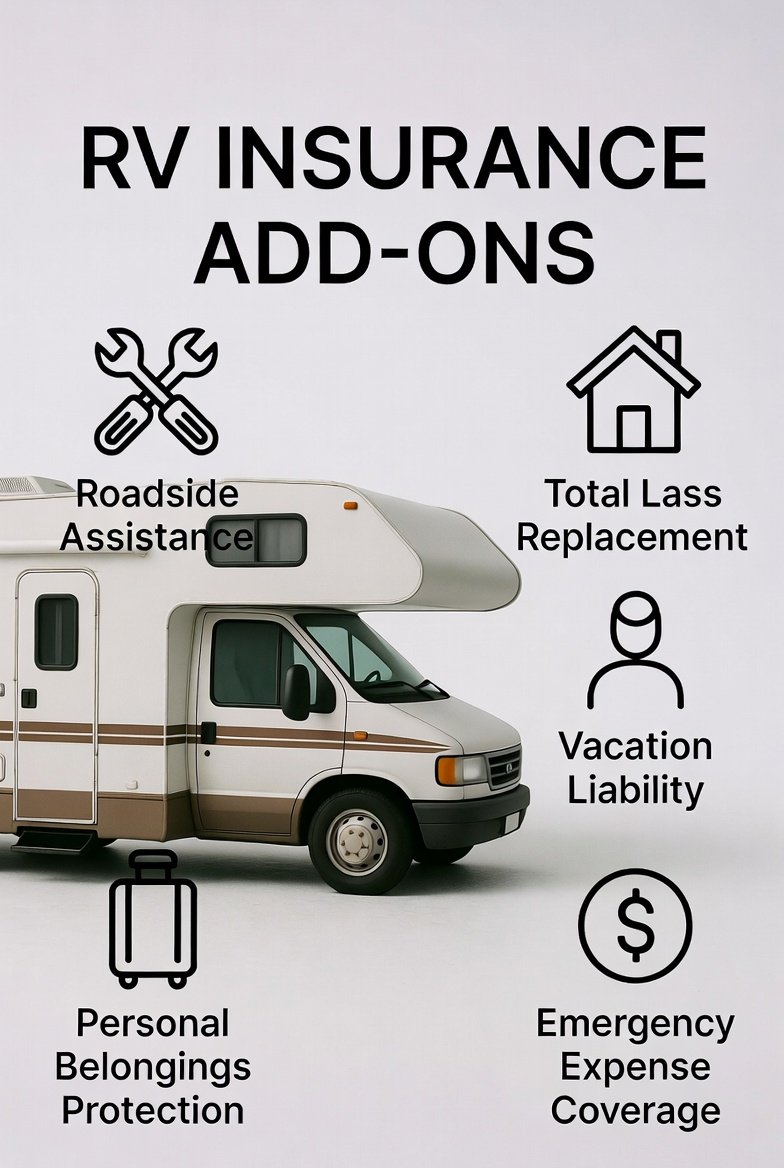
- roadside assistance
• vacation liability
• personal belongings coverage
• trip interruption protection
• full-time RV coverage
• total loss replacement
These options allow RV owners to customize coverage depending on how the RV is used.
Base RV Policy vs Optional Add-Ons
Understanding the difference between core coverage and optional riders helps avoid confusion.
Coverage Type | Included in Basic Policy | Optional Add-On |
Liability | ✔ | – |
Collision | ✔ | – |
Comprehensive | ✔ | – |
Personal belongings | – | ✔ |
Roadside assistance | – | ✔ |
Vacation liability | – | ✔ |
Trip interruption | – | ✔ |
Full-time RV coverage | – | ✔ |
This coverage structure is why add-ons are sometimes called policy enhancements.
For example, a standard policy may cover vehicle damage, but it may not automatically cover personal belongings inside the RV.
Most Common RV Insurance Add-Ons Explained
Below are the riders most RV owners encounter.
Roadside Assistance Coverage
Roadside assistance helps when the RV breaks down during travel.
Typical services include:
- towing to the nearest repair shop
• jump-starting a dead battery
• tire changes
• fuel delivery
• lockout assistance
Heavy RV towing can cost several hundred dollars per incident.
Because RVs are large and complex vehicles, roadside assistance is one of the most commonly recommended add-ons.
Vacation Liability Coverage
Vacation liability applies when the RV is parked and being used as temporary living space.
Example scenario:
A guest visiting your campsite trips over a step and is injured.
Vacation liability may cover:
- medical costs
• legal expenses
• property damage claims
This coverage functions somewhat like homeowner liability insurance while the RV is parked.
Personal Effects Coverage
Personal effects coverage protects belongings inside the RV.
Examples include:
- laptops
• cameras
• camping equipment
• clothing
• portable electronics
Standard auto-style policies may not cover personal property losses.
Personal effects riders help protect valuables that travel inside the RV.
Trip Interruption Coverage
Trip interruption coverage helps when travel is unexpectedly disrupted.
Example scenario:
An RV breaks down during a cross-country trip.
Repair time: five days
Trip interruption coverage may pay for:
- hotel stays
• transportation costs
• meals
• temporary lodging expenses
This coverage helps travelers manage the financial impact of unexpected travel delays.
Full-Time RV Coverage
Some RV owners live in their RV full time.
In those cases, the RV functions more like a home than a vehicle.
Full-time RV coverage may include:
- personal liability protection
• additional medical payments coverage
• expanded personal belongings coverage
It works similarly to homeowners insurance for people whose RV is their primary residence.
Total Loss Replacement Coverage
Total loss replacement coverage helps when a newer RV is destroyed in an accident.
Instead of paying only depreciated value, some policies may replace the RV with a comparable new model.
This coverage is typically available for newer RVs or recently purchased motorhomes.
Typical Cost Direction of RV Insurance Add-Ons
Optional riders increase the cost of a policy, but the impact varies.
Add-On | Typical Cost Direction |
Roadside assistance | Low |
Vacation liability | Low |
Personal effects coverage | Moderate |
Trip interruption | Moderate |
Full-time RV coverage | Higher |
Total loss replacement | Higher |
Exact pricing depends on factors like RV value, usage patterns, and insurer guidelines.
To understand how optional riders affect policy pricing overall, see:
When RV Insurance Add-Ons Are Actually Worth It
Not every rider is necessary for every RV owner.
The right combination depends on lifestyle and RV value.
RV Lifestyle | Important Add-Ons |
Weekend camper | Roadside assistance |
Long-distance travelers | Trip interruption |
Full-time RV living | Full-time RV coverage |
Expensive motorhome | Total loss replacement |
RV with valuable equipment | Personal effects coverage |
The goal is to match optional coverage with real-world risk.
Real-World Add-On Scenarios
Roadside breakdown
An RV engine fails in a remote area.
Heavy tow cost: $900
Roadside assistance covers the tow.
Campsite accident
A visitor trips over a step near the RV.
Vacation liability coverage may help pay injury claims.
Theft of belongings
Electronics and gear are stolen from inside the RV.
Personal effects coverage reimburses lost items.
Travel disruption
An RV breaks down hundreds of miles from home.
Trip interruption coverage pays for temporary lodging.
Verification Checklist Before Choosing RV Add-Ons
Before adding optional coverage, verify these details.
- Does the base policy already include similar coverage?
• Are coverage limits high enough for your belongings?
• Does roadside assistance cover large RV towing?
• Does full-time coverage apply if the RV is your primary residence?
• Do travel plans involve long-distance trips or remote areas?
Coverage terms vary between insurers and policies.
Common Mistakes When Choosing RV Insurance Add-Ons
Some RV owners add riders that provide little real value.
Common mistakes include:
- purchasing duplicate coverage already included in the policy
• adding riders without checking coverage limits
• ignoring travel patterns when selecting protection
• assuming personal belongings are automatically covered
• skipping roadside assistance for large motorhomes
Carefully reviewing policy options helps avoid unnecessary costs.
Related Coverage Topics
To understand the broader RV insurance structure, see:
These pages explain how coverage limits and exclusions affect claims.
FAQ
Are RV insurance add-ons required?
Most riders are optional. However, some lenders may require certain coverages if the RV is financed.
Is roadside assistance worth it for RV owners?
For many RV owners, roadside assistance is valuable because heavy-duty towing for large motorhomes can be expensive.
Does RV insurance automatically cover personal belongings?
Not always. Personal belongings are often protected through a separate rider.
Do full-time RV owners need different insurance?
Yes. Full-time RV coverage provides protections similar to homeowners insurance for people living in their RV permanently.
Can RV add-ons be removed later?
Many insurance companies allow riders to be adjusted during policy renewal or policy updates.